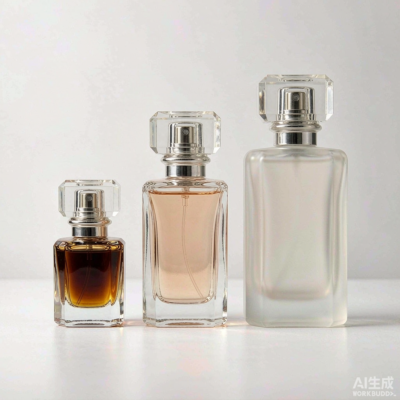
Choosing the right perfume bottle size isn’t just a packaging decision. It’s a pricing strategy, a retail placement decision, and a customer psychology play all rolled into one. The 50ml perfume bottle dominates the market — but that doesn’t mean it’s the right choice for every brand.
We’ve worked with hundreds of fragrance brands over the years, and the size question comes up every single time. Here’s what we’ve learned about how 30ml, 50ml, and 100ml bottles compare — and how to pick the one that fits your brand, your margins, and your customer.
Why Bottle Size Matters More Than You Think
Walk into any Sephora or department store perfume section. What do you see? Rows of 50ml and 100ml bottles on the main display, with 30ml versions tucked nearby as “travel options” or gift sets. That’s not accidental. Retailers plan shelf space around bottle sizes because size directly correlates with price point and turnover rate.
Here’s the breakdown of what each size typically means in the market:
| Size | Typical Retail Price Range | Primary Use Case | Target Customer |
|---|---|---|---|
| 30ml | $45 – $85 | Travel, discovery, entry-level | New customers, younger buyers |
| 50ml | $75 – $145 | Standard retail, everyday wear | Mainstream buyers, gift recipients |
| 100ml | $120 – $250+ | Premium, loyal customers | Repeat buyers, luxury segment |
The 50ml perfume bottle accounts for roughly 55-60% of all fragrance sales globally. That’s the sweet spot — big enough to feel substantial, small enough to not intimidate price-sensitive buyers. But the landscape is shifting.
The 30ml Perfume Bottle: Small but Strategic
Don’t dismiss the 30ml. It’s quietly becoming one of the most strategic sizes in the industry.
Who buys 30ml bottles?
Three distinct customer segments drive 30ml sales:
- New customers testing a scent. A 30ml bottle lets someone try a fragrance without committing $150. If they love it, they upgrade to 50ml or 100ml next time.
- Travelers and commuters. TSA’s 3.4-ounce (100ml) liquid rule makes 30ml bottles perfect carry-on companions. No decanting, no hassle.
- Gen Z and younger millennials. This demographic switches fragrances frequently. They’d rather own three 30ml bottles than one 100ml. Variety beats volume.
The business case for 30ml
The margin math on 30ml bottles surprises people. A 30ml glass perfume bottle costs roughly $0.85-$1.20 from a Chinese manufacturer (depending on decoration and cap type). The retail price? Often $55-$75. That’s a markup that would make any CFO smile.
But there’s a catch. Retailers often resist stocking 30ml as a standalone product because the absolute dollar margin is lower. A 50ml at $95 generates more shelf profit than a 30ml at $55, even if the percentage margin is similar. So if you’re going retail-first, your 30ml strategy needs to be part of a discovery set or gift bundle, not a standalone SKU.
When to choose 30ml
Go with 30ml if:
- You’re launching a new brand and want low barrier to entry
- Your scent is polarizing (love-it-or-hate-it profiles)
- You’re targeting Gen Z or the travel retail channel
- You plan to offer discovery sets with multiple 30ml bottles
The 50ml Perfume Bottle: The Industry Standard
The 50ml perfume bottle is the undisputed king of fragrance retail. Walk through any duty-free shop — it’s wall-to-wall 50ml. There’s a reason for this dominance.
Why 50ml wins
The 50ml hits a psychological sweet spot. It feels substantial in the hand. The bottle has enough presence on a vanity to justify the price. And it typically lasts 2-3 months with daily use — long enough to feel like value, short enough to drive repurchase.
From a manufacturing perspective, the 50ml is also the most efficient size to produce. Most stock molds in glass factories are designed around 50ml capacity. That means lower mold costs, shorter lead times, and more decoration options compared to unusual sizes.
50ml bottle dimensions and specs
Here’s what you can expect from a standard 50ml perfume bottle:
| Specification | Typical Range |
|---|---|
| Height | 95mm – 120mm |
| Diameter | 45mm – 60mm |
| Weight (empty) | 180g – 280g |
| Neck size | 15mm or 20mm (standard) |
| Wall thickness | 2.5mm – 4.0mm |
| Spray pump type | Crimp-on or screw-on |
These dimensions matter for packaging design. A 50ml bottle with a heavy base (250g+) signals luxury. A lighter 50ml (under 200g) works better for mass-market positioning.
The pricing psychology of 50ml
Here’s something most branding guides won’t tell you. The 50ml price point anchors the customer’s perception of your entire line. If your 50ml costs $120, your 100ml at $180 feels like a deal. But if your 50ml costs $65, your 100ml at $95 feels overpriced.
Price the 50ml strategically. It should be your profit center — the SKU where margin percentage and absolute dollars both hit their peak. Many brands actually lose money or break even on 30ml (using it as customer acquisition) and make their real profit on the 50ml.
The 100ml Perfume Bottle: Premium Positioning
The 100ml says one thing: commitment. A customer buying 100ml has tried the fragrance, liked it, and decided it’s worth a larger investment. That’s a loyal customer.
When 100ml makes sense
The 100ml bottle works best for:
- Established brands with proven scent profiles and loyal followings
- Gifting occasions where size = generosity (holiday season, Valentine’s Day)
- Luxury positioning where the bottle itself is a display piece
- Cost-per-ml optimization — 100ml typically offers 20-30% better value per ml than 50ml
The manufacturing considerations
A 100ml bottle requires more glass, which means higher per-unit cost. But the real cost increase comes from decoration. Larger surface area means more silk screen ink, more frosting chemical, more foil. A fully decorated 100ml bottle can cost 40-60% more than an equivalent 50ml, even though it only holds twice the volume.
Weight is another factor. A 100ml bottle with a heavy base can weigh 350g-450g. That affects shipping costs, packaging requirements, and even shelf display engineering. If you’re selling DTC, factor the weight into your free shipping threshold.
The refilling trend
Here’s where the 100ml gets interesting. With the rise of refillable perfume bottles, some brands are positioning their 100ml as a “refillable reservoir” — the customer buys the 100ml once, then purchases 100ml refill pouches at a lower price point. Brands like Le Labo, Maison Margiela, and Mugler have proven this model works.
This ties directly into sustainability positioning, which we discuss in our guide to the perfume glass bottle market trends. EU regulations are pushing the industry toward refillable systems, and the 100ml format is the natural anchor for refill programs.
Side-by-Side Comparison: 30ml vs 50ml vs 100ml
Let’s put all three sizes head to head:
| Factor | 30ml | 50ml | 100ml |
|---|---|---|---|
| Unit cost (factory) | $0.85 – $1.20 | $1.10 – $1.80 | $1.60 – $2.80 |
| Typical retail price | $45 – $85 | $75 – $145 | $120 – $250+ |
| Gross margin % | 65-75% | 60-70% | 55-65% |
| Customer type | New / curious | Mainstream | Loyal / luxury |
| Shelf presence | Minimal | Strong | Dominant |
| Repurchase cycle | 4-6 weeks | 8-12 weeks | 4-6 months |
| Best for | Discovery, travel | Core retail | Premium, gifting |
| Shipping weight | Light | Medium | Heavy |
| Mold availability | Good (stock) | Excellent (stock) | Good (stock/custom) |
How to Decide: A Decision Framework
Stop guessing. Use this framework to pick your size:
- What’s your retail channel? If you’re going through department stores or Sephora, lead with 50ml. If you’re DTC-only, you have more flexibility. If travel retail is your channel, 30ml is mandatory.
- Who’s your target customer? Gen Z and younger millennials lean toward 30ml for variety. Established professionals default to 50ml. Luxury customers expect 100ml options.
- What’s your pricing strategy? If you’re positioning as affordable luxury ($60-$90 range), 50ml is your anchor. If you’re true luxury ($150+), lead with 50ml but make sure 100ml is available. If you’re entry-level ($30-$50), 30ml might be your primary size.
- What’s your production volume? If you’re ordering under 5,000 units, stick with stock molds in 50ml. Custom shapes in 30ml or 100ml require higher MOQs to justify mold costs. Our manufacturing guide covers this in detail.
- Do you plan a full range? Many brands launch with a single 50ml, then expand to 30ml + 100ml once they have traction. This minimizes initial investment while leaving room to grow.
The Multi-Size Strategy: What Smart Brands Do
The most successful fragrance brands don’t pick one size. They create a range. Here’s the pattern we see working:
- 30ml as the entry point — priced competitively, sometimes sold in discovery sets of 3-5 scents
- 50ml as the core product — full margin, full decoration, the hero SKU
- 100ml as the premium option — positioned as “best value” with a lower per-ml price
This three-tier approach serves every customer segment and maximizes lifetime value. The 30ml acquires customers. The 50ml generates profit. The 100ml retains loyal buyers.
According to data from Statista, fragrance brands offering at least two sizes see 35% higher repeat purchase rates than single-size brands. The variety matters.
Bottle Size and Fragrance Type: A Hidden Connection
Here’s something most guides skip. The type of fragrance you’re selling should influence your bottle size.
- Fresh, citrus, aquatic scents (light molecules, fast evaporation): These scents fade quickly on skin. A 50ml gets used up fast. Consider 100ml for daily-wear fresh scents.
- Heavy, oriental, woody scents (slow evaporation, potent projection): A little goes a long way. 30ml or 50ml is plenty. 100ml might sit half-used for years.
- Seasonal scents (summer vs winter fragrances): 30ml is ideal. The customer finishes it by the time the season changes.
If you’re creating a signature scent meant for daily, year-round wear, 50ml is the safe bet. For a special-occasion fragrance, 100ml might be overkill — stick with 30ml or 50ml.
Common Mistakes When Choosing Bottle Size
We’ve seen brands get this wrong in predictable ways:
- Starting too big. A new brand launches with only a 100ml at $180. Customers hesitate to spend that much on an untested scent. The brand flops. Start with 50ml (or even 30ml) and build trust.
- Ignoring the travel market. Travel retail is a $30+ billion channel. If your bottle doesn’t fit the 100ml liquid rule for carry-on, you’re leaving money on the table.
- Underestimating packaging costs. A 100ml bottle requires a bigger box, more protective packaging, and higher shipping costs. Your COGS calculation needs to account for the entire packaging system, not just the bottle.
- Forgetting about the pump. Different bottle sizes often require different pump lengths. A 30ml pump won’t reach the bottom of a 50ml bottle. This sounds obvious, but we’ve seen it happen.
The Bottom Line
There’s no universal “best” size. The 50ml perfume bottle dominates because it works for the most brands in the most situations. But your specific product, customer, and channel should drive the decision.
If you’re just starting out: go 50ml. It’s the safest bet with the widest mold availability, the best margin balance, and the clearest retail acceptance. Add 30ml and 100ml once you’ve validated demand.
If you’re an established brand: make sure you offer all three sizes. Each serves a different customer segment and revenue function.
Need help sourcing the right bottle size for your brand? We manufacture 30ml, 50ml, and 100ml perfume glass bottles with full customization — from stock molds to custom shapes, with eight decoration techniques available. Request a quote and tell us about your project. We’ll recommend the best size and configuration for your specific needs.