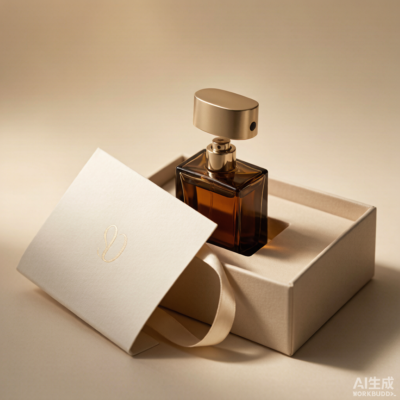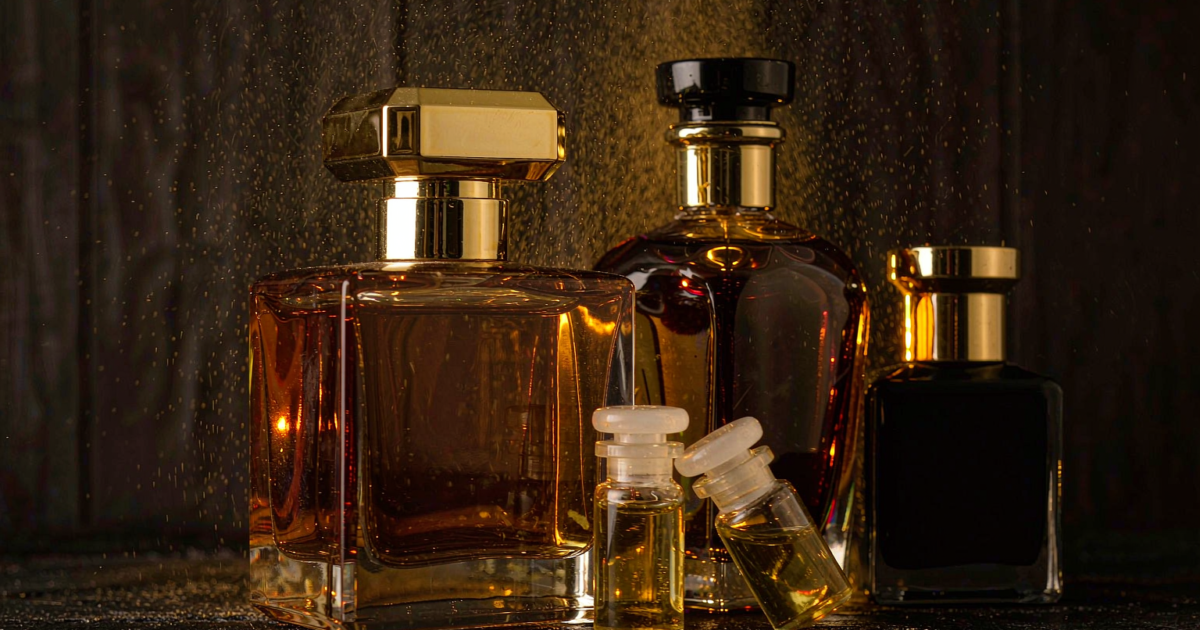
Few fragrance categories are as visually coded as the Gulf market. A buyer sourcing dubai style perfume bottle wholesale programs is not simply ordering glass — they are ordering a shape language that has been refined over decades by attar houses, oud distillers, and the retail shelves of Deira, Dubai Mall and Riyadh’s Boulevard. The bottle must read as precious before a single drop is smelled: heavy in the hand, faceted or fluted, capped in gold, and often opaque enough to signal that the contents are too valuable to expose to light.
That visual expectation collides with a hard commercial reality. Attar and oud programs are usually low-volume per SKU, high in decoration complexity, and unforgiving on closure quality because the oils inside are viscous, expensive, and prone to leaking through a badly matched pump or a poorly annealed neck. This guide covers what “Dubai style” means in glass terms, which bottle formats suit which product, how to specify neck finishes and closures for oil-based fragrances, what decoration actually costs, and how to structure MOQs and shipping for the Gulf region without overcommitting capital.
What “Dubai Style” Actually Means in Glass
The phrase gets used loosely, but in factories serving the Gulf it maps to a recognisable set of physical traits.
Mass over thinness. Emirati and Saudi premium retail rewards heft. A 50 ml flacon in this category commonly runs 150–230 g of glass rather than the 90–120 g typical of a European designer spray. The extra wall thickness costs money in glass and freight, but it is the single most reliable signal of quality to a Gulf consumer, who will weigh the bottle in the hand before reading the label.
Faceting and fluting. Cut-glass geometry — vertical flutes, diamond facets, hobnail patterns, or a moulded mashrabiya-inspired lattice — reads as heritage. These are mould features, not post-process engraving, so they must be designed into the tooling. Deep facets on thick walls also create the internal light refraction that makes amber oud oils glow.
Gold, but controlled. Electroplated collars, metallized shoulders, gold-lacquered caps and hot-stamped bands are standard. The risk is over-decoration: a bottle with plated shoulder, printed body and a metallic label competes with itself. The strongest Gulf programs typically pick one hero surface and keep the rest quiet.
Opaque or heavily tinted glass. Amber, cobalt, and opaque black or lacquered bodies protect light-sensitive oils and signal luxury. This has a chemistry dimension covered in our guide to colored glass and fragrance stability: amber glass filters UV, while a purely decorative coating may do nothing for the formula.
| Visual signal | Glass/decoration route | Typical cost impact vs clear flint | Watch out for |
|---|---|---|---|
| Heft | Thicker walls, 150–230 g for 50 ml | +12–25% glass cost, +freight weight | Annealing control; thick walls crack if the lehr curve is wrong |
| Faceted body | Mould tooling with cut geometry | One-time tooling, then neutral per-piece | Facet depth limited by wall thickness; deep cuts create stress points |
| Gold collar | Electroplating or metallization on a separate collar | Low per-piece, high setup | Plating adhesion after washing; test before bulk |
| Metallic body | Vacuum metallization over base coat | Moderate per-piece | Coverage inside the neck; abrasion at the pump skirt |
| Opaque body | Lacquered or solid-coloured glass | Moderate | Weight tolerance and colour consistency batch to batch |
The Attar and Oud Formats That Drive Bottle Choice
Bottle selection follows the product format, and the Gulf market runs four distinct formats that are often confused in sourcing conversations.
Traditional attar (3–12 ml). Small, often tola-shaped or slender roll-on vials, frequently with a glass wand or a tight screw cap. These are collectible objects. The critical spec is the neck and stopper fit, because attar is applied by touch and evaporates if the seal is imperfect.
Oud oil (3–30 ml). Viscous, dark, and extremely expensive per millilitre. Buyers accept a high unit cost for glass because the loss from a leaking bottle dwarfs the packaging price. Sealing integrity is the whole game here.
Eau de parfum in Gulf styling (50–100 ml). A spray, but dressed in the Gulf visual language — heavy faceted body, gold collar, opaque cap. This is the fastest-growing segment because it bridges local taste with the convenience of a spray.
Gift and mukhallat sets (2–6 pieces). Multi-bottle presentations in a rigid box, often with a mix of formats. Bottle consistency across a set matters more than any single bottle’s design.
| Format | Typical capacity | Closure | Bottle priority | Failure mode to design out |
|---|---|---|---|---|
| Traditional attar | 3–12 ml | Glass stopper or screw cap with liner | Stopper fit and surface polish | Evaporation through a poor seal |
| Oud oil | 3–30 ml | Tight screw cap, sometimes with dropper | Neck roundness and thread quality | Leakage in transit and at retail |
| Gulf-styled EDP | 50–100 ml | Crimp or screw pump | Weight, facets, collar plating | Pump/neck mismatch causing seepage |
| Gift set | 2–6 bottles | Mixed | Uniform height and colour | Set assembled with mismatched dye lots |
Note that spray pumps are not automatically the right answer for oils. Our article on roll-on perfume bottles and when they beat sprays covers the mechanics: a standard spray pump is calibrated for alcohol-thin liquids, and pushing a heavy oud oil through it produces a weak, spitting spray and premature clogging.
Neck Finishes and Closure Quality for Oil-Based Fragrance
This is where Dubai-style programs fail most often, and it is almost never a glass aesthetics problem. It is a dimensional one.
A crimp-neck flacon’s seal depends on the sealing land width, the finish diameter, and the roundness of the bore. Oils are less volatile than alcohol but far more aggressive on elastomers — they swell and degrade conventional liners over months. Three specifications matter:
- Finish standard. 13/415 and 15/415 are the common crimp standards; the difference in bore and land geometry changes which pumps fit and how much force the crimp needs. Our comparison of 13/415 versus 15/415 neck finishes explains when each is appropriate.
- Liner material. For oil contact, specify a liner rated for the specific oil class rather than a default PE foam. Ask the closure supplier for the chemical compatibility statement, not just a datasheet dimension drawing.
- Crimp and torque validation. For screw closures, specify application torque and test removal torque after accelerated ageing at elevated temperature. A cap that opens easily on day one and seizes after six weeks on a Dubai shelf is a return.
For a robust program, ask for a leakage validation protocol: filled bottles held at 45 °C for 72 hours, inverted and upright, then inspected for weight loss and visible seepage. Weight-loss testing is more sensitive than visual inspection because a slow seep leaves no stain on dark glass.
Decoration Language: Where the Money Goes
Decoration is the largest variable cost in a Gulf program and the easiest place to overspend. A typical premium build layers three or four operations, and each adds setup plus a reject rate.
Electroplating. A plated collar or a fully plated shoulder gives the strongest gold read. Adhesion depends on substrate cleanliness and the base coat; plating applied over sprayed colour rather than bare glass is more fragile. Always test adhesion after the washing step the filling line will use, because some fillers wash bottles before filling.
Metallization. Vacuum metallization gives a mirror finish at lower cost than plating and works well on caps and collars. The limitation is durability at the neck opening, where abrasion from the pump skirt can wear through the film.
Lacquering and soft-touch coating. Opaque lacquer over glass produces the deep saturated bodies common in Gulf retail. Soft-touch coatings feel premium but attract fingerprints and scuff in transit; specify a scuff-resistant topcoat if the bottle ships in a display box without a pouch.
Printing and engraving. Laser engraving through a coating to reveal clear glass is a popular Gulf treatment because it looks permanent and cannot be rubbed off. Screen printing is cheaper at volume but wears; the crossover usually sits above roughly 20,000 pieces per design.
MOQ, Tooling and Order Structure
Gulf programs are usually fragmented: several fragrances, several bottle shapes, modest quantities each. That fragmentation drives cost far more than the headline bottle price.
| Order shape | Realistic MOQ | Tooling implication | Best used for |
|---|---|---|---|
| Stock mould, one decoration | 3,000–5,000 pcs per colour | None | Testing a new market or a limited oud line |
| Stock mould, multi-decoration | 5,000–10,000 pcs | Small setup per decoration | Flagship SKUs in a gifting season |
| Custom mould | 10,000–30,000 pcs per shape | Full tooling, 25–45 days | Brand-defining bottle reused across a range |
| Custom mould plus custom closure | 20,000+ pcs | Two toolings | Vertically integrated premium house |
Two structural levers reduce landed cost without touching the bottle price. First, consolidate colours: run two or three fragrances in the same bottle and differentiate by decoration and label, which amortises glass over a larger run. Second, decouple the pump from the bottle tooling — use a standard 15 mm crimp pump on a custom flacon so the closure is a catalogue item, not a second development project. Our guide to negotiating MOQ with perfume bottle suppliers covers the tier structures factories actually use and where the real breakpoints sit.
Shipping, Climate and Compliance for GCC Destinations
Three practical issues dominate Gulf logistics for glass.
Heat. Containers sitting in Jebel Ali or Dammam yards in summer can exceed 60 °C internally. That affects adhesives on labels, coating adhesion, and the elastomer in closures. Specify label adhesive rated for high-temperature exposure, and avoid soft-touch coatings that block or bloom in heat.
Transit breakage. Thick-walled heavy bottles break differently from thin ones — they are more likely to chip at the neck and base than to shatter. Carton design should isolate the neck, since that is the dimensionally critical area. The companion guide to perfume bottle carton and pallet specs covers the packing arithmetic, including why heavier bottles often need a lower carton count per layer rather than more cushioning.
Documentation. For cosmetic packaging into the GCC, expect to provide material declarations for glass and decoration chemicals, plus conformity documentation depending on the destination’s cosmetic regulation. The regulatory landscape for fragrance packaging into the EU and US is covered in our guide to FDA cosmetic packaging regulations-eu-cosmetic-packaging-perfume-glass/”>FDA and EU cosmetic packaging rules for perfume glass; GCC requirements differ in detail but the underlying evidence — heavy metals, migration, coating composition — is the same set of documents.
Specification Mistakes That Cost Gulf Programs Money
Four errors recur across sourcing conversations in this category.
Specifying weight in words instead of grams. “Heavy glass” means nothing on a purchase order. Specify a target weight with a tolerance band, for example 180 g ± 8 g for a 50 ml flacon. Without a band, the factory will drift toward the low end to protect yield.
Choosing an opaque coating for a light-sensitive oil and assuming it protects. A lacquer film blocks visible light but not necessarily UV. If UV protection is the goal, amber glass or a UV-blocking coating specification is required, and it should be stated as a performance requirement with a test method.
Ordering the bottle before the closure is validated. The pump or cap determines whether the product survives. Validate the closure on the actual production glass — not on a lab sample — before releasing the bulk order.
Ignoring dye-lot variation across a gift set. Opaque lacquered bodies vary between production batches. For sets, require all components in one lot or accept a visible mismatch at retail. Specify lot-consistency as a PO line, not a hope.
FAQ
What is the difference between an attar bottle and a standard perfume bottle?
An attar bottle is built around application by touch or a controlled drop rather than a spray. That means a much tighter closure — often a ground glass stopper or a precision screw cap — and a smaller capacity, usually 3–12 ml. The glass is often thicker relative to its size, and the seal quality, not the shape, is the defining engineering requirement.
Can I use a standard crimp spray pump on an oud oil?
Generally not without validation. Standard pumps are calibrated for low-viscosity alcohol solutions. A viscous oud oil will spray weakly, may clog the nozzle, and can attack the pump’s internal elastomers. If you need spray delivery for an oil-based product, discuss a pump rated for higher viscosity with the closure supplier and test on the actual oil before committing.
What MOQ should I expect for a custom Dubai-style bottle?
For a fully custom mould, expect 10,000–30,000 pieces per shape, with tooling lead time of 25–45 days on top of production. If that volume is too high for a new line, the standard route is a stock mould with heavy decoration — facets or fluting already in the tool, combined with plating and printing — at MOQs from roughly 3,000–5,000 pieces.
How do I protect oud oil from light degradation in a clear bottle?
Clear flint glass offers no UV protection. Either move to amber glass, which filters a meaningful portion of UV, or specify a coating with a stated UV-blocking performance and a test method. A decorative lacquer that merely looks opaque should not be assumed to protect the formula; treat UV performance as a specification with evidence, not an aesthetic side effect.
Why do my bottles leak after filling even though the caps fit in sampling?
Because sampling tests torque and fit, not seal durability over time with the actual product. Oils swell and degrade liners, and glass dimensions vary within tolerance batch to batch. Ask for a leakage validation on production glass with the actual formula: 72 hours at 45 °C, inverted and upright, measured by weight loss rather than visual inspection.