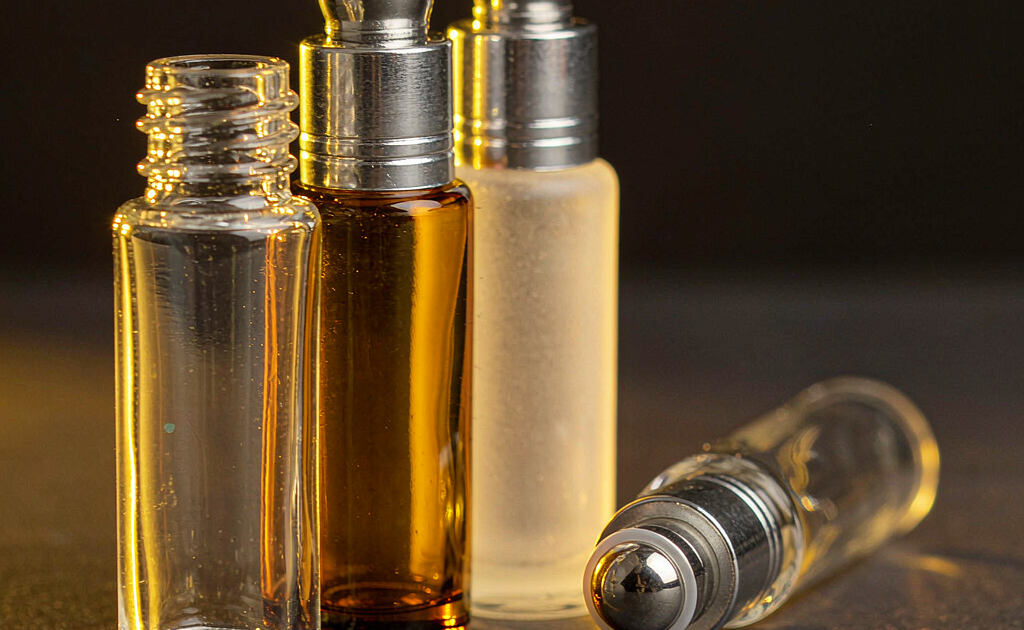
If you are sourcing packaging for a body-oil line, a kid-friendly fragrance, or a travel-size SKU, roll-on perfume bottles deserve a place on your shortlist before you default to another atomizer. A roll-on perfume bottle is a small glass or plastic container fitted with a ball applicator — typically stainless steel or glass, 8 mm to 15 mm in diameter — that dispenses fragrance by direct contact with the skin. For many product categories it outsells spray formats, and the manufacturing economics favor buyers who understand where the format wins and where it does not.
Why Roll-On Perfume Bottles Exist
The roll-on format was commercialized for deodorants in the 1950s and migrated into fragrance because it solved three problems that atomizers never fully addressed. First, it delivers product without propellants or pump mechanisms, which removes an entire tier of component sourcing and failure modes. Second, it applies fragrance precisely — no overspray, no inhalation, no wasted mist. Third, the dose per application is naturally metered: a 10 mm steel ball releases roughly 0.02–0.05 ml per pass, versus 0.1–0.15 ml per stroke for a standard spray pump. That dose control is exactly why oil-based fragrance brands adopted the format so aggressively.
For a B2B buyer, the strategic question is not “is roll-on better than spray?” but “for which SKUs does the roll-on format increase margin and reduce logistics friction?” The answer depends on viscosity, target user, and price positioning.
When Roll-On Beats Spray: Six Buying Scenarios
1. Fragrance Oils and High-Viscosity Formulas
Perfume oils, body oils, and cuticle oils can be 5–20 times more viscous than ethanol-based perfume. Spray pumps clog with oils above roughly 20 cP unless you specify oil-compatible FEA pumps, which cost more and still risk crimp leakage. A PTFE or PE ball with a properly matched orifice handles viscosities up to several hundred cP without any pump at all. If your client’s formula is oil-based, the roll-on is often the only packaging that survives a 3-month stability test. For more on how spray systems handle different formulas, see our breakdown of perfume spray pump output.
2. Travel Retail and TSA-Compliant SKUs
A 10 ml roll-on sits comfortably under the 100 ml carry-on threshold, and because it is not pressurized, it passes airport security without questions. Airline and duty-free buyers have pushed roll-on mini SKUs hard in the last three years — a 10 ml roll-on typically retails at 25–40% of the price of the 50 ml spray, driving impulse conversion at checkout. From a factory standpoint, a 10 ml roll-on cylinder uses about 40 g of glass versus 110–150 g for a comparable 50 ml spray bottle, which matters enormously when sea freight is quoted by volume and weight.
3. Kids’ and Teen Product Lines
No pump means no spray in the face, no accidental ingestion risk from aerosol, and no small parts beyond the ball itself (which is retained by the insert). Brands targeting 8–16 year olds consistently choose roll-on because parents perceive it as safer, and retail buyers know the format reduces returns.
4. Hair Fragrance and Beard Oils
Direct-contact application is a feature, not a compromise, for hair mists and beard oils. The ball distributes oil along the hair shaft rather than coating the air. Grooming brands in the GCC and Southeast Asia — both large fragrance oil markets — default to roll-on for this reason.
5. Sampling Programs
Sampling economics change completely with roll-on. A 2 ml or 3 ml glass vial with a 6.6 mm steel ball and a plastic cap costs roughly $0.09–0.16 at 50,000 units, versus $0.20–0.35 for a miniature spray vial with a functional crimp pump. When you are producing 200,000 samples for a launch, that delta funds the entire influencer seeding budget. For a deeper comparison of sample formats, read our analysis of 5ml vs 10ml perfume sample bottles.
6. Halal, Alcohol-Free, and Sensitive-Skin Positioning
Many alcohol-free fragrance lines — especially in Middle Eastern and Southeast Asian markets — use oil bases that simply do not atomize well. Roll-on packaging signals “oil” to the consumer, reinforcing the positioning without a word of copy.
When Spray Is Still the Better Choice
Be honest with your client when the format does not fit. Roll-on performs poorly for:
- Eau de parfum with 15–20% fragrance concentration in ethanol — the alcohol evaporates on the ball and can leave residue rings on the neck.
- Projection-driven luxury positioning — a spray creates a scent cloud; a roll-on does not. If the brand story is about sillage, the format fights the story.
- Very volatile top notes — repeated skin contact warms the ball and accelerates top-note flash-off for some accords.
If your SKU is a classic alcohol-based EDP in a 50–100 ml format, stick with a spray. Our guide to 100ml vs 125ml perfume bottles covers that end of the range.
Component Anatomy: What You Are Actually Buying
A complete roll-on unit has four components, and quoting errors usually come from buyers who treat it as one SKU instead of a system:
- Glass body — typically 3 ml, 5 ml, 10 ml, or 15 ml cylindrical or faceted glass. Clear flint, amber, and frosted finishes are standard; colored glass adds $0.02–0.05 per unit at MOQ.
- Ball applicator — stainless steel (304 or 316) for premium feel and corrosion resistance with acidic oils; glass balls for formula purity and zero metal-ion risk; polypropylene or PTFE balls for the lowest cost. Diameter must match the neck: common pairings are 8 mm ball / 8.2 mm orifice, 10 mm / 10.3 mm, and 15 mm / 15.4 mm.
- Insert (seat) — a PE or LDPE gasket that holds the ball, meters the fluid, and prevents leakage. Insert orifice tolerance is the single biggest driver of leak complaints; a 0.1 mm mismatch either starves the ball or floods it.
- Cap — usually aluminum or PP screw cap, sometimes with an inner EPE or TPE liner for transit sealing.
Assembly is typically done at the filling site: bottles ship bulk-packed in trays, components ship in separate cartons. Insist on a leak-test protocol — our article on perfume bottle leak testing describes the vacuum and inversion methods we recommend before shipping any roll-on order.
Ball Material Selection: The Decision Most Buyers Get Wrong
Stainless steel looks premium and rolls smoothly, but 201-grade steel will pit within weeks against citrus or cinnamon oils. Specify 304 as the floor and 316L for anything with essential oils above 10% concentration. Glass balls eliminate ion-leaching questions entirely — relevant if your client sells into the EU where cosmetic safety assessments scrutinize contact materials under the Cosmetics Regulation framework, and useful to reference alongside FDA cosmetic packaging regulations cosmetic guidance for the US market. PE and PTFE balls cost 30–50% less and are functionally fine for body oils, but they transmit less “cool touch” — a small detail that luxury buyers notice.
Cost Benchmarks and MOQs (2026 Factory Pricing)
Indicative FOB China pricing at standard MOQs, for budgeting purposes:
| Component / Set | Spec | MOQ | FOB Range |
|---|---|---|---|
| Complete roll-on set | 10 ml flint glass, 10 mm steel ball, aluminum cap | 10,000 | $0.28–0.45 |
| Complete roll-on set | 5 ml amber glass, 8 mm PE ball, PP cap | 10,000 | $0.19–0.30 |
| Mini sample vial | 3 ml glass, 6.6 mm steel ball, plastic cap | 50,000 | $0.09–0.16 |
| Decorated set | + silk-screen 1 color | 10,000 | +$0.04–0.08 |
| Custom mold glass | Any shape, your design | 20,000–50,000 | +$1,500–4,000 mold fee |
Lead times run 20–25 days for stock-mold production and 35–45 days when a new mold is involved. If decoration is on the critical path, compare options in our hot stamping vs cold foil comparison before locking artwork.
Quality Checks Specific to Roll-Ons
Beyond standard glass inspection — which we cover in quality control for perfume bottle production — roll-ons need three additional checks:
- Ball retention pull test. The insert must retain the ball against an axial pull of roughly 30 N so the ball cannot be swallowed by a child.
- Dosing consistency. Roll 20 units across a test panel and weigh the deposited film; variance above ±15% indicates insert orifice drift.
- Rolling smoothness. A gritty or skipping ball is usually a burr on the insert seat — 100% visual plus tactile sampling at AQL 1.5 catches it.
The Bottom Line for Buyers
Roll-on perfume bottles win wherever oil viscosity, dose control, travel compliance, or sampling economics dominate the brief. They lose where projection and ritual matter more than precision. Specify the ball material against the actual formula, demand the leak and retention tests in writing, and price the set as four components — not one line item. Do that, and the format reliably delivers a lower landed cost per application than any spray equivalent.
FAQ
What sizes do roll-on perfume bottles come in?
The standard range is 3 ml, 5 ml, 10 ml, and 15 ml. The 10 ml cylinder is the global bestseller because it balances retail price point, shipping weight (about 40 g filled), and consumer perception of value. The 3 ml format dominates sampling programs.
Which ball material should I choose for fragrance oils?
Use 316L stainless steel for essential-oil-heavy formulas, 304 steel for standard body oils, and glass balls if your client needs zero metal contact — for example for EU cosmetic safety assessments. PE and PTFE balls are the budget option and work fine for low-acid oil blends.
What is the typical MOQ for custom roll-on perfume bottles?
Stock-mold sets start at 10,000 units per design. Fully custom glass shapes require 20,000–50,000 units plus a mold fee of roughly $1,500–4,000, with 35–45 day lead times from mold approval.
How do I prevent roll-on bottles from leaking in transit?
Match the insert orifice to the ball diameter within 0.1–0.3 mm, use a lined cap, and require vacuum leak testing plus a 24-hour inversion test before shipment. Bulk components should ship in separate cartons with the bottles tray-packed to avoid insert dislodgement.
Are roll-on bottles compliant with airline carry-on rules?
Yes. A 10 ml roll-on is well under the 100 ml liquids limit, and because it contains no pressurized propellant it is treated as a standard liquid, not an aerosol — making it ideal for travel retail and duty-free SKUs.