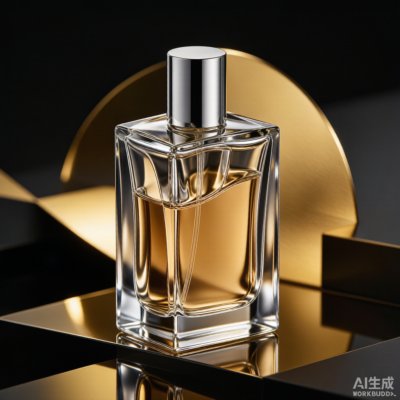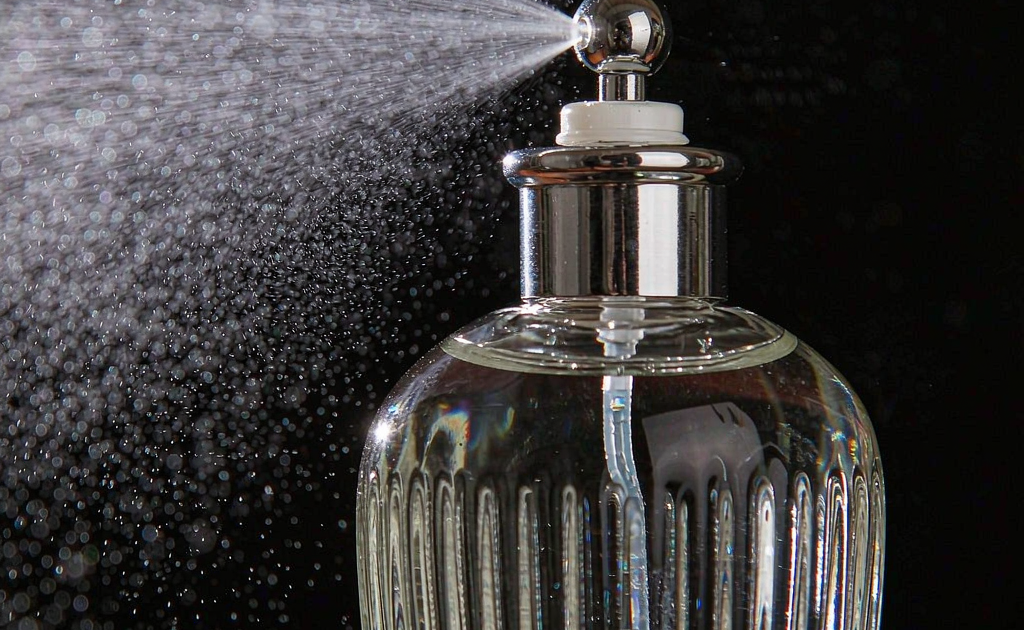
Ask a fragrance buyer what controls the consumer experience of a perfume and they will usually name the juice, the bottle, or the cap. Fragrance developers know better: the spray pump — the crimped atomizer hidden under every cap — is the component the consumer interacts with most often, and its single most important specification is output per stroke. The industry has largely settled on two standard outputs: 0.1ml and 0.15ml per actuation, with a few 0.12ml and 0.2ml variants in between. Choosing between them affects fill volume economics, spray pattern, dosing consistency on the filling line, and how long a bottle lasts in the consumer’s hands.
For B2B buyers specifying a complete perfume bottle program, this guide explains what pump output actually measures, how the two standard options differ in practice, and how to decide which belongs on your spec sheet.
What “Output per Stroke” Actually Measures
Pump output is the volume of liquid dispensed in one full actuation — press and release — measured at standardized conditions. Test protocols typically average 10–20 strokes on a dosing robot, using test fluid with defined viscosity and surface tension, at controlled temperature. Reputable pump manufacturers quote output with a tolerance, usually ±0.01ml on a 0.1ml pump and ±0.015ml on a 0.15ml pump.
A few points buyers should understand before comparing quotations:
- Output is not adjustable by the bottle factory. It is set by the pump’s dip tube diameter, spring chamber volume, and valve design — the pump supplier’s domain, not the glassworks. Always specify the pump brand or standard when quoting, because two “0.1ml” pumps from different manufacturers can deliver visibly different sprays.
- Priming strokes matter. Most pumps deliver under-spec on the first 1–3 strokes until the chamber fills. Premium pumps prime in 1–2 strokes; economy pumps can take 4–5. Consumers experience this as a pump that “doesn’t work” at first use.
- Output tolerance compounds over the bottle’s life. A pump running 20% over spec quietly gives away 20% of your fill volume — pure margin leakage.
The Two Standards Compared
0.1ml per stroke — the precision option
The 0.1ml output dominates prestige and niche fragrance, fine mists, and any product where dosing control matters. Its characteristics:
- Spray pattern: Finer mist, smaller droplet size (typically 50–100 micron droplets with good pump heads), softer landing on skin
- Dose economics: A 50ml bottle at 0.1ml/stroke delivers ~500 actuations minus priming and dead volume — roughly 100+ days of twice-daily use
- Best for: Eau de parfum and extrait concentrations, niche positioning, delicate juice formulations, premium gift sets
- Trade-offs: More strokes to cover an area; consumers who like a generous cloud may perceive the fragrance as weak; slightly higher pump unit cost
0.15ml per stroke — the workhorse
The 0.15ml output is the volume standard across eau de toilette, body mists, hair mists, and mid-market eau de parfum:
- Spray pattern: Fuller, wider cone; more visible “cloud” on first spray
- Dose economics: Same 50ml bottle delivers ~330 actuations — the consumer perceives generosity early but repurchases sooner
- Best for: EDT concentrations, mass retail, secondary lines, markets where consumers judge quality by initial spray drama
- Trade-offs: Coarser droplets on cheap heads can feel “wet”; over-dosing premium juice costs you real material per spray
The perception point deserves emphasis: consumers judge a perfume heavily on the first three sprays. A dramatic 0.15ml cloud reads as “strong” even when the concentration is lower than a discreet 0.1ml mist of better juice. Matching pump output to your concentration tier and price positioning is a marketing decision as much as an engineering one.
Output, Fill Volume, and Margin: The Arithmetic Buyers Miss
Here is the calculation that should be in every packaging RFQ review. Take a 100ml eau de parfum retailing with, say, $8 of juice cost per 100ml:
- At 0.1ml/stroke: ~1,000 actuations per bottle; juice cost per spray ≈ $0.008
- At 0.15ml/stroke: ~667 actuations; juice cost per spray ≈ $0.012
If your average user sprays four times daily, the 0.15ml pump delivers an extra 0.2ml per day — over a 100ml bottle’s life, that is the difference between 250 days and 167 days before repurchase. Whether that is good or bad depends on your repurchase strategy: fragrance brands chasing repurchase velocity sometimes prefer the higher output deliberately; niche brands protecting scarcity and bottle longevity choose 0.1ml.
Also confirm the dead volume — liquid left unreachable in the bottle when the pump can no longer draw. Standard dip tubes leave 3–5ml; angled or bent dip tubes and bag-on-valve systems reduce it. On a 30ml bottle, 4ml of dead volume is 13% of the fill you paid for.
Consistency on the Filling Line
Pump output interacts with your filling and crimping process in ways that show up in QA data:
- Crimp depth changes output. An under-crimped pump leaks and over-primes; an over-crimped pump restricts the spring stroke and under-doses. Output verification should be part of crimp-height validation on every size change — typically checked by dosing 10 strokes into a graduated vial per line position.
- Viscosity sensitivity. Pumps are calibrated on test fluid. Oily or high-alcohol formulations can shift output by ±10–15%. If your juice is unusually viscous (high oil load, body-mist hybrids), send a sample to the pump supplier for calibration runs.
- Sampling plan. For incoming QC, a standard plan tests output on 30–50 pumps per lot; mean and standard deviation should sit within the quoted tolerance. We cover the broader inspection framework in our quality control checkpoints guide.
Matching Output to Bottle Size and Positioning
A practical pairing table from client programs:
| Format | Recommended output | Rationale |
|---|---|---|
| 5–10ml travel / sample | 0.06–0.1ml | Maximize actuations on tiny fills |
| 30ml EDT | 0.1ml | Balance of mist fineness and longevity |
| 50ml EDP | 0.1ml | Prestige standard; protects juice |
| 100ml EDT | 0.15ml | Generous cloud; volume positioning |
| 100ml EDP | 0.1–0.12ml | Longevity signals quality |
| Body / hair mist | 0.15–0.2ml | Large-area coverage expected |
Pump standards, actuator compatibility, and neck finish (typically FEA 15, 18, 20, or 24mm) are standardized through industry bodies; the Fragrance Creators Association and FEA standards documentation are useful references when aligning pump and bottle neck specifications across suppliers.
One integration trap worth flagging: a pump matched to one bottle geometry may not transfer to another. Spray angle, actuator height under the cap, and dip-tube length all depend on the bottle’s shoulder and internal height. When you switch bottle molds — for example moving from a tall cylindrical bottle to a low square-shoulder design — re-validate the pump, not just the cap fit.
How to Specify Output in Your RFQ
Put these five lines on the pump section of your spec sheet:
- Nominal output: 0.1ml or 0.15ml, tolerance ±0.01ml, measured per FEA-type protocol
- Priming strokes: ≤3 to full output
- Spray pattern: cone width and droplet spectrum reference (photo or supplier standard)
- Dead volume: ≤4ml on the specified bottle
- Compatibility test: supplier confirms output and pattern on your actual juice or a simulated formulation
Pumps that pass a written spec like this are the ones that survive consumer use; verbal “yes it’s 0.1ml” answers are how brands end up with slow sprays and angry reviews.
FAQ
Which is better for an eau de parfum, 0.1ml or 0.15ml per stroke?
For most EDP programs, 0.1ml is the better choice. EDP is applied in fewer, more deliberate strokes; the finer mist of a 0.1ml pump suits higher oil concentrations and signals precision. 0.15ml suits EDT and body mists where consumers expect a generous cloud and judge strength by the first spray. The exception: if your market research shows consumers in your target segment equate big spray with quality, 0.15ml on an EDP can work — it just consumes juice faster.
Does pump output affect how long a perfume bottle lasts?
Directly. A 50ml bottle delivers roughly 500 actuations at 0.1ml per stroke versus about 330 at 0.15ml — a 50% difference in usable life. If your brand strategy depends on repurchase frequency, higher output shortens the cycle; if it depends on bottle longevity and premium perception, 0.1ml extends it. Remember to subtract priming strokes and dead volume (3–5ml) from any calculation.
Why does my pump deliver less on the first few sprays?
That is priming. A dry pump chamber must fill with liquid before it can meter accurately. Most pumps reach full output within 1–3 strokes; economy pumps can take 4–5. If first-spray performance matters for unboxing content and retail testers, specify “≤3 priming strokes to full output” in your pump RFQ and verify it during incoming QC.
Can I change pump output without changing the bottle?
Yes, in most cases. Pump output is a function of the pump, not the glass, so you can usually swap a 0.15ml pump for 0.1ml on the same bottle neck finish (e.g., FEA 18mm) as long as the actuator geometry and dip-tube length are matched to the same bottle. Note that the spray pattern and actuator height should be re-validated, and minimum order quantities for the new pump still apply.
How is pump output tested in quality control?
Standard practice doses 10–20 full strokes into a graduated vessel using a dosing robot or fixture, with test fluid at controlled temperature, and averages the result. Incoming QC typically samples 30–50 pumps per lot and checks that the mean falls within the quoted tolerance (e.g., ±0.01ml on 0.1ml). Output should also be spot-checked after crimp-height changes on the filling line, since crimp depth directly affects stroke mechanics and therefore delivered volume.