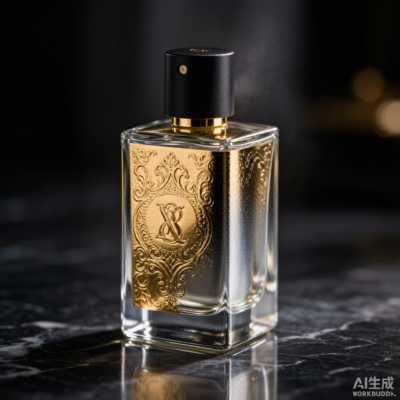
frosted glass perfume bottles sell 22-38% better than identical clear bottles at the same price point. That isn’t opinion — it’s the consistent pattern across major fragrance launches from 2018-2026. The frosting creates the visual difference, but how you achieve it determines your decoration cost, lead time, and finish durability.
Two methods dominate: acid etching and sandblasting. Both create matte surfaces, but they are not interchangeable. After 14 years specifying decoration on thousands of bottle designs, I can tell you that about 65% of buyers pick the wrong method first and discover it during production.
How Acid Etching Actually Works
Acid etching uses hydrofluoric acid (HF) or, more commonly in modern factories, a buffered ammonium bifluoride solution. The acid attacks the glass surface, dissolving 25-80 microns of the outer layer and leaving a uniform matte texture.
The process flow at a typical factory:
- Glass bottles loaded into plastic-coated racks
- Surface pre-cleaned with deionized water + mild surfactant
- Acid bath submersion: 60-180 seconds at 22-28°C
- Neutralization rinse in caustic solution
- Triple water rinse (deionized for premium work)
- Drying tunnel: 80°C for 12-18 minutes
- Inspection under polarized light for evenness
Cycle time: 8-15 minutes per batch. A 32-station rack processes 200-400 bottles per hour.
The acid dissolves glass because HF breaks the silicon-oxygen bonds in the SiO₂ structure. The resulting texture is microscopically smooth — it’s the millions of micro-pits that scatter light, not actual roughness. That’s why acid-etched bottles feel smoother to the touch than sandblasted ones, despite both being “matte.”
How Sandblasting Works
Sandblasting propels fine abrasive media (aluminum oxide, glass beads, or silica sand) at high velocity against the glass surface using compressed air at 80-120 psi.
The process:
- Bottle masked with vinyl stencil or photo-resist film (for patterns)
- Loaded into blasting cabinet or rotary table
- Abrasive stream impacts glass for 30-120 seconds
- Mask removed (if applicable)
- Compressed air blow-off
- IPA wipe + final inspection
Cycle time per piece: 45-180 seconds. Throughput depends on whether you’re blasting the entire bottle or just a pattern area. Full-bottle frosting runs 300-500 pieces per shift per operator.
Sandblasting physically chips away glass, creating a more pronounced surface texture. The depth varies 40-120 microns depending on dwell time and grit size. That deeper texture is why sandblasted bottles feel slightly grittier — sometimes pleasantly tactile, sometimes not, depending on grit selection.
Side-by-Side Comparison
| Parameter | Acid Etching | Sandblasting |
|---|---|---|
| Surface depth | 25-80 microns | 40-120 microns |
| Texture feel | Smooth, slightly waxy | Gritty, matte |
| Light transmission | 65-80% (more translucent) | 50-70% (more opaque) |
| Pattern detail | Poor (limited masking options) | Excellent (vinyl stencil precision) |
| Edge definition | Soft, blended | Sharp, crisp |
| Cost per piece (50ml) | $0.10-$0.25 | $0.18-$0.40 |
| Setup cost | Low (bath chemistry) | Higher (stencil + cabinet) |
| Lead time | 5-7 days for full runs | 7-10 days (pattern work) |
| MOQ | 500-1,000 typical | 200-500 typical |
| Environmental load | High (HF waste handling) | Lower (abrasive recycling) |
| Worker safety | High PPE requirement | Moderate (respiratory) |
| Durability (years) | 20+ | 15-25 |
When Acid Etching Is the Right Choice
Choose acid etching when:
- You want full-bottle frosting with no pattern detail. Acid etch produces uniform matte across the entire surface — the elegant, expensive-looking finish you see on frosted glass perfume bottles from Hermès, Dior, and most apothecary brands.
- Your decoration combines acid etch with hot stamping or silk-screen printing. Acid-etched surfaces accept inks and foils beautifully because the micro-pit texture gives mechanical adhesion.
- You need consistent appearance across 10,000+ pieces. Acid etch is chemistry — it scales linearly with bath time and temperature, so results are predictable.
- You want soft, blended edges. Acid naturally feathers edges because it dissolves equally in all directions. Sandblasting leaves crisp edges that can look “cut out.”
- Your bottle has complex curves. Acid reaches into recesses and undercuts that sandblasting can’t easily access. Bottle shoulders, base indentations, and narrow necks frost evenly in acid baths.
When Sandblasting Wins
Choose sandblasting when:
- You need a clear pattern or logo on a frosted background (or vice versa). The vinyl stencil process allows 0.3mm line precision. Acid etching through resist film works but caps at about 1mm resolution and adds lead time.
- You want sharp, defined edges in your decoration. Geometric patterns, brand monograms, tribal-inspired motifs, and architectural designs look crisper in sandblast.
- Your design requires partial transparency — frosted stripes on clear, frosted lower 40% with clear top, etc. Sandblasting with masked areas handles this elegantly.
- You prefer lower environmental compliance burden. Acid etching generates HF waste that requires specialized treatment. Sandblasting generates spent abrasive that recycles more easily.
- You want variable density within one design. Sandblasting with multiple grits in one pass creates gradient effects — coarse frost at the base, fine frost at the shoulder — that acid etch can’t replicate cleanly.
The Hybrid Approach: Best of Both
Many premium fragrance houses combine both methods on a single bottle:
- Body: Acid-etched for uniform elegance
- Logo or pattern: Sandblasted for crisp definition
- Result: The acid-etched field looks sophisticated and tactile; the sandblasted detail pops without feeling harsh.
This is the construction behind Tom Ford’s private blends, several Maison Margiela Replica editions, and most Le Labo body products. It costs more — typically $0.30-$0.55 per piece for the combined decoration — but the visual result justifies it for $80+ retail positioning.
The lead time for hybrid finishing: 8-12 days, versus 5-7 for acid-only or 7-10 for sandblast-only. Plan your custom perfume bottle production calendar accordingly.
Common Mistakes Buyers Make
Mistake #1: Specifying sandblasting when the design is a uniform frost. Sandblasting an entire bottle for uniform frosting is wasteful — acid etch costs 30-40% less and looks better.
Mistake #2: Assuming acid etching handles fine linework. The chemistry is forgiving for full coverage but struggles with detailed logos. If your brand mark is below 1.5mm stroke width, plan for sandblast.
Mistake #3: Skipping the factory sample. The depth, texture, and translucency vary 15-25% between factories running the same spec. Always commission a sample run (5-10 bottles) before committing to 10,000-piece production.
Mistake #4: Forgetting durability differences. Acid-etched finishes last 25+ years without visible wear. Sandblasted finishes can show “polishing” in high-touch areas (logo, shoulder, base) after 2-3 years of consumer handling. For prestige positioning, specify acid etch on all touch zones.
Mistake #5: Ignoring regulatory disclosure. EU CLP regulations require labeling if bottles contain trace HF residue above 0.1% by weight post-production. Properly rinsed bottles fall below threshold, but the documentation must travel with the shipment.
Cost Breakdown at Different Volumes
Real factory quotes for 50ml bottles with full frost finish (Q1 2026 market):
- 1,000 pieces:
- Acid etch: $0.32-$0.48/piece
- Sandblast: $0.45-$0.68/piece
- Setup fee: $180-$350
- 5,000 pieces:
- Acid etch: $0.18-$0.28/piece
- Sandblast: $0.25-$0.40/piece
- Setup fee: amortized, often waived
- 10,000 pieces:
- Acid etch: $0.12-$0.20/piece
- Sandblast: $0.18-$0.32/piece
- Setup fee: amortized
- 50,000+ pieces:
- Acid etch: $0.08-$0.14/piece
- Sandblast: $0.12-$0.22/piece
- Setup fee: amortized; volume discount applies
The crossover point where acid etch becomes definitively cheaper is around 3,000 pieces. Below that, sandblast’s simpler setup can win.
Sustainability Considerations
Acid etching uses hydrofluoric acid, which is heavily regulated under EU REACH and US OSHA. Factories handling HF must have:
- Closed-loop neutralization systems
- Worker PPE including face shields and acid-resistant suits
- Wastewater treatment to <2 ppm fluoride discharge
- Air scrubbers on drying tunnels
- Annual third-party safety audit
A responsible factory will show you their HF handling certification (ISO 9001 quality management 14001 environmental management plus local chemical handling permits). If they can’t produce those documents, find another supplier.
Sandblasting has its own sustainability concerns:
- Abrasive dust capture requires HEPA-filtered ventilation
- Spent abrasive contains fine glass particles (typically silica) requiring proper disposal
- Worker respiratory protection is essential (silicosis risk)
Both processes have environmental footprints. For brands with aggressive ESG commitments, request a third-party LCA (life cycle assessment) from the decoration supplier — most established factories will have one on file.
How to Specify in Your RFQ
When requesting quotes for frosted perfume bottles, send this brief to every factory:
- Bottle dimensions and drawing (or 3D file)
- Frost coverage: full / partial / pattern (with reference photo)
- Frost method preference: acid / sandblast / either
- Edge preference: soft / sharp / both
- Required durability: standard / 5-year / 10-year / heirloom
- Annual volume by SKU
- Target unit cost
- Compliance: EU REACH, FDA cosmetic packaging regulations, California Prop 65
- Sustainability certifications needed (RCS, ISCC, GRS if applicable)
- Lead time expectation
Add decoration specifications to your main bottle RFQ rather than running a separate process. Factories price decoration most accurately when they can co-optimize with bottle forming.
Frequently Asked Questions
Can you acid etch a curved bottle without uneven frosting?
Yes, with proper racking and bath agitation. The bottle must rotate slowly during submersion to ensure uniform acid contact. Modern factories use programmable rocking racks — bottles dip in and out at 4-6 cycles per minute with controlled tilt. Without that agitation, you’ll get visible banding or uneven frosting, especially on tall bottles above 100mm height.
Is acid-etched glass safe for essential oils and cosmetic formulas?
Yes. Properly rinsed acid-etched bottles have neutral pH on the inner surface (verified by factory QC spot checks). The roughness is purely external. For acidic formulations (pH below 3.5), specify a separate acid-resistant inner coating. Most fragrance formulas are pH 5-7 and require no additional protection.
How do you clean fingerprints off frosted perfume bottles?
Acid-etched finishes hide fingerprints better than sandblasted because the matte texture breaks up the oil sheen. For sandblasted bottles, an IPA wipe during final packaging removes handling marks. Consumers should avoid abrasive cleaners on either surface — microfiber cloth with a small amount of glass cleaner is sufficient.
What’s the lead time penalty for switching from sandblast to acid mid-production?
About 5-7 days of additional setup. Acid etching requires bath preparation, chemistry calibration, and worker safety briefing. If you’ve started sandblasting 2,000 pieces and decide to switch methods for the remaining 3,000, expect a week of downtime plus possible MOQ adjustment on the partial batch. Better to decide method upfront.
Can sandblasting match acid etch translucency?
Not exactly. Acid-etched glass transmits 65-80% of visible light through the frosting. Sandblasted transmits 50-70%. If your design depends on seeing juice color through the frost, acid etch wins. If the frosting is purely decorative and the juice doesn’t need to show, sandblast gives you crisper edges and lower environmental burden.
Next Steps for Your Frosted Bottle Project
If you’re launching a new SKU and weighing acid etch against sandblast, request samples of both methods from your factory before locking your mold. Most suppliers ship a 6-bottle comparison kit (3 acid, 3 sandblast, various grit and depth) within 7-10 days for $80-$160.
For guidance on how frosting interacts with heavy base weighted bottles, decoration layering with silk screen and hot stamping, or PCR glass integration alongside frosting, send your spec sheet to our factory team. We return a decoration cost breakdown and lead time analysis within 18 hours.