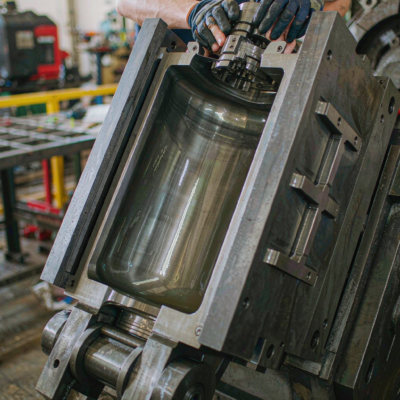
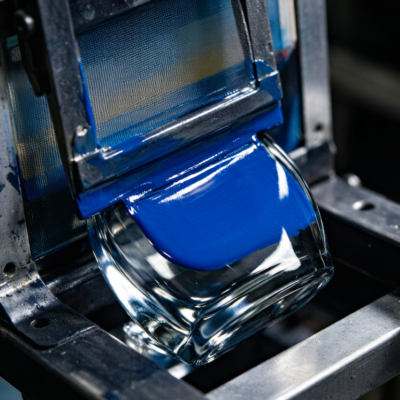
Open a carton of perfume bottles and the defects you can see — a crack, a chipped neck — explain themselves. The ones that quietly decide whether a program runs profitably are the ones inside the glass: a stone buried in the sidewall, a cord wandering through the shoulder, a bubble the size of a pinhead sitting exactly where the printing will go. These are melting and forming defects, they have precise names in the glass industry, and each one tells you something specific about the factory that produced it.
For a buyer, glass bottle defects are diagnostic. Stones point to batch house discipline. Cords point to furnace and forehearth control. Bubbles and blisters point to melting temperature and gob handling. Learning to read them turns your inspection reports from a list of failures into a statement about which supplier processes are under control — and which claims in a factory’s sales pitch are decoration.
This article explains what each defect physically is, why it forms, how severe it is for perfume bottle use, how it is detected, and what acceptance limits are defensible in a purchase specification.
Stones: Solid Inclusions in the Glass
A stone is a solid crystalline inclusion embedded in the glass — a particle of unmelted batch material, refractory brick eroded from the furnace wall, or crystallized silica.
Where they come from:
- Batch stones. Unmelted sand grains or other raw materials that failed to dissolve, usually because the batch was poorly mixed, the cullet ratio spiked without temperature compensation, or the furnace ran too cold. Batch chemistry and melting control are covered in our cullet ratio in perfume glass quality article.
- Refractory stones. Chips of furnace or forehearth block erosion carried into the glass stream. These tend to appear in waves — a furnace late in its campaign sheds more refractory — and they are often zirconia-rich, which a lab can identify by X-ray.
- Devitrification stones. Crystals that grow in the glass itself when glass sits too long at the wrong temperature, typically in a stagnant forehearth corner.
Severity for perfume bottles. A stone is the most dangerous common defect, for two reasons. First, thermal expansion: a stone has a different expansion coefficient than the surrounding glass, creating a permanent local stress field — a bottle containing a large stone can crack spontaneously days or weeks after forming, sometimes on the brand’s filling line or worse, on a consumer’s shelf. Second, optics: a stone in a premium flacon’s sidewall is plainly visible and reads as a quality failure.
Acceptance practice. Stones are critical defects. Standard container practice rejects any visible stone regardless of size on premium glass; for volume flacons a limit of “no stone > 0.5 mm and no stone in the neck finish or base contact area at any size” is a defensible minimum. Any stone on a decorated or premium line should be zero-tolerance.
Cords: Streaks of Wrong-Composition Glass
A cord is a streak or band of glass whose chemical composition differs from the surrounding glass — locally more silica-rich or more alumina-rich, typically. It is not a foreign object; it is badly homogenized glass.
Why it forms. Melting is only half the job; the melt must then be homogenized by thermal convection and, where fitted, mechanical stirring. A furnace pushed beyond its rated pull, a forehearth temperature that is stratified (hot on top, cool at the bottom), or a stale dead-glass corner in the forehearth all produce cords. Cords also appear after furnace repairs, when the refractory has changed but the glass chemistry has not yet re-stabilized.
How you see them. Cords have a slightly different refractive index than the matrix glass. In clear flint glass they appear as wavy distortion lines when you look through the bottle at an edge or a printed grid — the classic check is the “projected stripe” or shadowgraph test. In colored glass, or behind a frosted finish, they are nearly invisible optically but remain mechanically significant.
Severity. A cord creates local stress because the two glasses contract differently on cooling. Most cords in container glass are benign at container scale; but on a heavy-base flacon, a cord crossing the base-to-heel transition — the highest-stressed region — reduces impact resistance measurably. Cords also telegraph through thin sidewalls as visible optical distortion, which is why a “wavy” panel on an elegant flacon is often a cord, not a design feature.
Acceptance practice. Specify cords by observation method, not by adjectives: “no visible cord distortion when viewed against a 1 mm grid at 300 mm through the sidewall” is testable. Stress-polariscope checks catch the dangerous ones — cords that carry residual stress — and belong in the inspection plan alongside the cameras described in our automated vision inspection article, because cameras alone do not reliably flag cords.
Bubbles: Seeds and Blisters
Gas in glass comes in two size classes, and the industry names them differently.
Seeds are small bubbles, typically under 1 mm, left from melting: gases trapped between batch grains, air clinging to cullet surfaces, or gases dissolved in the melt that failed to rise out. Fine seeds in small numbers are a normal feature of soda-lime glass; the melting question is whether fining — the process stage where gas is encouraged to coalesce and escape — ran hot enough and long enough. Over-pulled furnaces (melting more glass than the fining stage can clear) produce seed waves.
Blisters are larger elongated bubbles, usually 1–10 mm, formed during the forming process itself. The classic causes: a gob cut with a tail of cooler glass, shear marks from the scissors folded into the parison, or air trapped during the press or blow stroke. Blisters are forming defects, not melting defects — which is useful diagnostically, because they tell you to look at gob handling and machine setup rather than the furnace.
Where bubbles matter most on a perfume bottle:
| Location | Why it matters | Typical limit |
|---|---|---|
| Neck finish / sealing land | Any bubble breaks the seal geometry | Zero tolerance |
| Base bearing surface | Bubble collapses under load; bottle rocks or cracks | Zero tolerance above ~0.5 mm |
| Decorated sidewall panel | Visible through print or foil | No bubble > 0.3–0.5 mm in decoration zone |
| General sidewall | Cosmetic only on clear glass | Count-based: e.g., no more than N seeds > 0.5 mm per bottle |
| Inside a heavy base | Hidden, but weakens drop performance | Limited by zone, per AQL |
Acceptance practice. “Bubbles allowed” is not a specification. A defensible spec is zone-based: zero in functional zones (finish, base bearing, sealing interfaces), a size cap and a count cap elsewhere, with the count scaled to bottle value. The inspection method that enforces this at production speed is the back-lit camera system described in our automated vision inspection guide — camera resolution determines which bubble sizes are actually being enforced.
How Defects Are Detected: From Polariscope to Camera
A realistic factory inspection stack for these internal defects:
- Back-lit sidewall cameras — catch stones, seeds above resolution limit, and large blisters at line speed. Resolution thresholds are covered in the vision inspection article.
- Base viewers — stones and blisters in the base, the zone most likely to cause field failures.
- Polariscope / stress measurement — cords carrying stress and annealing problems; typically offline sampling on premium glass, since inline stress viewing is slow.
- Shadowgraph / projection checks — cord distortion and contour accuracy on finished glass, usually on first-article and sampling basis.
- AQL statistical sampling — the final statistical gate; the sampling logic connecting inspection to acceptance is covered in our quality control checkpoints for perfume bottle production.
Note what cannot be reliably detected at line speed: sub-resolution seeds, optically hidden cords behind decoration, and stones under about 0.2 mm. This is why melting process control — not inspection — is the real lever on internal defects, and why a supplier’s furnace age, pull rate, and batch house discipline predict defect rates better than any inspection certificate.
Reading Defect Patterns Like an Auditor
The distribution of defects across a shipment or a production run tells you where the process is broken:
- One defect class, clustered in time (a few hours of production): a process excursion — temperature drop, gob weight drift. Ask for the production log for that window.
- One defect class, spread across days: a systematic issue — batch mix error, worn tooling, a furnace approaching overhaul.
- Stones concentrated near the heel/base: refractory erosion or batch stone settling; expect it to worsen near furnace campaign end.
- Blisters concentrated on one cavity of a multi-cavity mold: a machine setup problem on that section, not a glass problem — the fix is cheap and fast.
- Everything fine on samples, defects on mass production: the factory inspected a curated sample; the production reality differs. This is what per-batch inspection documentation exists to prevent.
When you receive a defect report, ask for the three-way breakdown: defect class × production date × mold cavity. A factory that can produce that breakdown has process control; one that reports only “some bubbles” does not.
What to Write Into Your Specification
A compact, testable defect clause for a perfume bottle PO:
- Stones: none visible at any size in any zone (critical defect; AQL 0.1 on sampling).
- Cords: no distortion visible through sidewall against a grid test; no stress-carrying cord at polariscope on sampled basis.
- Bubbles/blisters: zero in neck finish, base bearing surface, and any sealing or decorative interface zone; elsewhere max 1.0 mm size and max 3 per bottle (adjust count to bottle value); blisters classed major, seeds under 0.5 mm classed minor.
- Detection: sidewall and base camera inspection at 100%, validated detection ≥ 0.2 mm sidewall; polariscope sampling per batch.
- Documentation: per-batch defect report by class, with production date and cavity traceability for any reject cluster.
That is the same documentation discipline expected of factories serving pharmaceutical packaging buyers, and any glass plant supplying premium fragrance brands should be able to meet it without blinking. The forming-process context for all of this — how the melt becomes a bottle — is covered in how perfume glass bottles are made, and the annealing stage that determines residual stress is in our glass annealing process article.
FAQ
What is the difference between a seed and a blister in glass?
Size and origin. Seeds are small bubbles (under ~1 mm) formed during melting when gases fail to escape during fining. Blisters are larger, elongated bubbles (1–10 mm) formed during the forming process itself — from gob tails, shear marks, or trapped air in the press/blow stroke. Seeds point to furnace control; blisters point to machine setup. Seeds under 0.5 mm are usually cosmetic minors; blisters in functional zones are rejects.
Why is a stone in glass treated as a critical defect?
A stone has a different thermal expansion coefficient than the surrounding glass, creating a permanent local stress field. A bottle with a significant stone can crack spontaneously days or weeks after leaving the factory — sometimes on the filling line or in the consumer’s hands. Combined with poor optics on premium glass, this makes any visible stone an automatic reject on perfume bottles regardless of size.
Can factory cameras detect all bubbles and stones?
No. Camera detection is limited by resolution and lighting: a typical validated threshold is around 0.2 mm on the sidewall and base. Sub-resolution seeds, cords (which cameras do not reliably flag at all), and anything hidden behind decoration or in thick glass sections escape inline inspection. Internal defect quality is ultimately controlled by melting process discipline, not by cameras — which is why furnace condition and batch house practice matter in supplier selection.
What acceptance limits should I set for bubbles in a perfume bottle PO?
Use a zone-based spec: zero tolerance for bubbles in the neck finish, base bearing surface, and decoration interface zones; elsewhere a size cap (typically 1.0 mm) and a count cap (commonly 2–3 per bottle, tightened for premium glass), with seeds under 0.5 mm classed as minor. Classify stones as critical (zero tolerance) and blisters in functional zones as major defects, then enforce via AQL sampling.
A shipment passed inspection but the brand’s filling line reports random base cracks. What should I look for?
Look for invisible internal defects: stones near the base heel, stress-carrying cords through the base-to-heel transition, or residual stress from poor annealing — none of which standard cameras catch. Request the polariscope stress results and defect logs for the affected production dates, and have retained samples section-checked if possible. The pattern across production dates and mold cavities will tell you whether this is a furnace, forehearth, or annealing lehr issue.