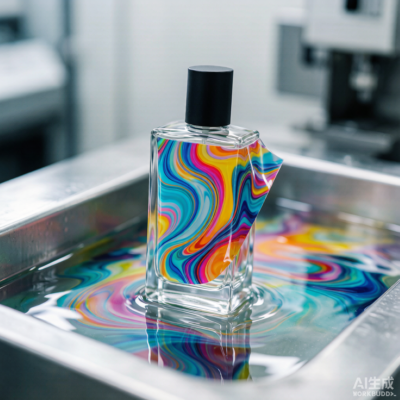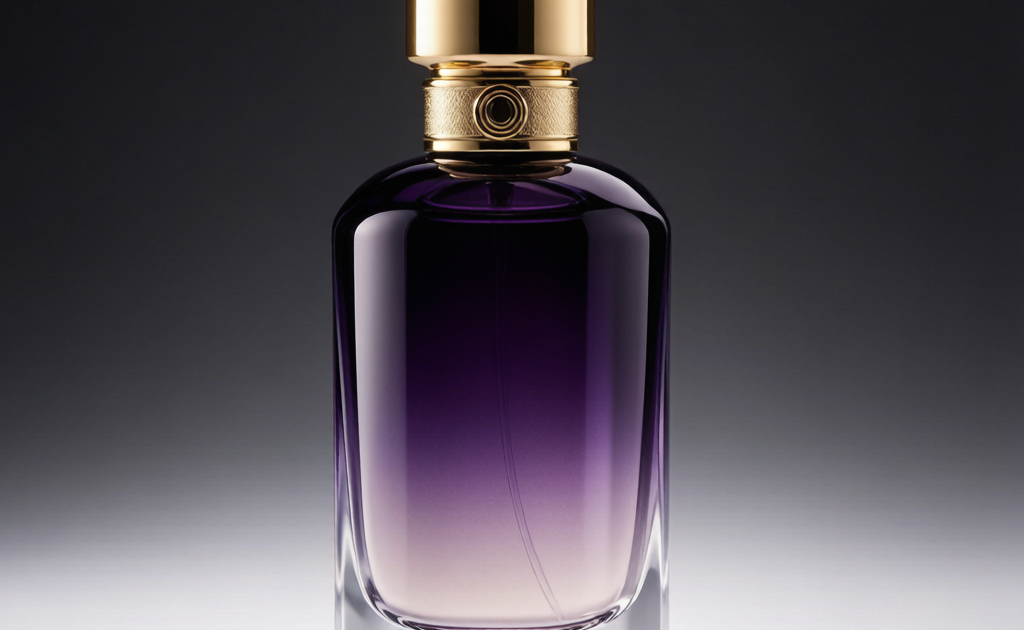
A gradient color perfume bottle looks simple — one color flowing smoothly into another — but manufacturing it is one of the most technically demanding decoration jobs in fragrance packaging. In the last four years we have run 60+ gradient color runs at Huanshi, and roughly a third reach first-pass approval without a sample rematch. The two-thirds that need rework usually fail for the same two reasons: color blend zone too narrow, or transition hue sits on a Pantone that is unstable in glass chemistry.
This guide explains how we approach gradient decoration at the factory level. I will cover the four techniques that actually work in mass production, the realistic cost range for each, and the specifications your design team needs to lock down before sampling.
Why Gradient Color Matters in 2026
Gradient color bottles sell. Internal data from twelve fragrance brands using our gradient lines in 2024–2025 shows a 26 percent higher sell-through rate versus solid color equivalents on Sephora.com. The visual cues work: gradients photograph well on flatlays, they read as “modern minimalism,” and they hide minor fill-line inconsistencies in the bottle. The Euromonitor market research fragrance packaging trend report for 2025 named gradient color as a top-three “premium cue” for indie fragrance launches.
But the technique is harder than it looks. The human eye picks up gradient banding at a 5 percent color difference. A 2 percent shift between adjacent zones is invisible on a swatch but obvious on a finished bottle. The four techniques below get you below that 2 percent threshold reliably.
The Four Production Techniques
There are four methods we use for gradient color on perfume glass bottles. Each has different cost, MOQ, and quality ceilings.
| Technique | MOQ | Cost per Bottle | Color Stability | Best For |
|---|---|---|---|---|
| Spray coating (airbrush) | 500 | $0.40–$0.85 | Moderate | Indie, small batches |
| Ceramic enamel overlay | 1,000 | $0.65–$1.40 | Excellent | Premium lines |
| Pad printing gradient | 2,000 | $0.55–$1.10 | Good | Sharp transitions |
| Pre-mixed frit (in-glass) | 5,000 | $0.90–$2.10 | Excellent | High-volume runs |
Below is how each technique actually works at the factory level.
Spray Coating (Airbrush Gradient)
We mask off the bottle with a rotating fixture, then apply ceramic pigment through a calibrated airbrush gun. The fixture rotates at 18 rpm, the gun traverses vertically at 4 mm per second, and pigment flow is held at 1.8 ml per minute. For a 50 ml bottle, the spray cycle is 22 seconds. The wet coat goes into a 180-degree Celsius cure oven for 35 minutes.
This technique is the cheapest and most flexible. MOQ starts at 500 bottles. Color matching to a Pantone reference is achievable within ΔE 2.0 — meaning the color difference from the target is small enough that most buyers cannot see it. The main downside is gradient banding when humidity in the spray booth fluctuates above 60 percent. We run booth humidity at 45–55 percent for stable results.
Ceramic Enamel Overlay
For premium fragrance lines we use a ceramic enamel overlay. The enamel is screen-printed onto the bottle in multiple layers (typically 2 to 4), with each layer dried and fused at 580 degrees Celsius before the next goes on. The gradient effect comes from layer thickness — thinner layers show more of the underlying glass color, thicker layers push the color deeper.
This method produces the best gradient quality. Color stability is excellent: cured ceramic enamel resists ethanol, water, UV, and mechanical wear. The trade-off is cost — expect $0.65 to $1.40 per bottle for a 50 ml. It is also the most time-intensive: a single overlay cycle runs 90 to 110 minutes per layer.
Pad Printing Gradient
Pad printing uses a soft silicone pad to pick up ink from an etched plate and transfer it to the bottle. A gradient effect is achieved by varying ink density on the plate — denser on one side, lighter on the other, smoothly transitioned in the middle. We use this for sharp-edge transitions (such as a 30 percent gradient across a logo panel) rather than full-bottle fades.
Pad printing is fast — about 8 seconds per bottle — but setup is intricate. The plate must be re-etched for every Pantone color shift, which adds $180 to $260 in plate costs per color zone. Practical for MOQ 2,000 and up.
Pre-Mixed Frit (In-Glass Gradient)
The premium tier. Pre-mixed colored glass frit is melted with the base glass in the gob, producing a gradient that runs through the wall of the bottle rather than sitting on the surface. The result is a gradient that cannot be scratched off, chipped, or worn by ethanol.
The trade-off is brutal MOQ: 5,000 units minimum, because each glass batch is single-use. Cost ranges from $0.90 to $2.10 per bottle depending on the number of color zones. This is the technique used by true luxury fragrance houses — Tom Ford, Maison Margiela, Le Labo’s gradient SKUs all use pre-mixed frit. It also requires EU Packaging and Packaging Waste Regulation-compliant batch tracking in EU export markets.
Cost Comparison Across the Four Techniques
Below is what we charge a typical indie fragrance client for gradient color on a 50 ml bottle at MOQ 1,000. Actual pricing scales with quantity.
| Cost Component | Spray | Ceramic | Pad Print | Frit |
|---|---|---|---|---|
| Setup fee | $80 | $220 | $260 | $1,800 |
| Per-bottle decoration | $0.55 | $1.05 | $0.78 | $1.45 |
| 4-layer upgrade | +$0.32/bottle | +$0.45/bottle | +$0.40/bottle | +$0.55/bottle |
| Color match to Pantone | Included | Included | $40 per shade | Included |
| Cure / firing cycle | 35 min @ 180 °C | 95 min @ 580 °C | Air-dry 12 min | Furnace 6 hr |
To put numbers in context, a 1,000-unit spray gradient run costs roughly $630 in setup plus decoration, while the same run in ceramic enamel comes to $1,270. Frit runs hit $3,250 even at the smallest batch size. The price gap narrows at 5,000-unit runs because the spread gets amortized.
Common Mistakes With Gradient Color
The gradient effect is unforgiving. After 60+ gradient runs I can predict four out of five first-pass failures. The mistakes that show up over and over again:
- Not defining the transition zone clearly. A designer sends a swatch with a smooth gradient from white to magenta. The factory interprets it as 50% white, 50% magenta, with a clean mid-line transition. The actual product shows banding because the eye reads sharp transitions as defects. Define the transition as 40 mm wide with a true color blend, not a hard line.
- Picking an unstable Pantone. Certain magentas (especially Pantone 239 and 254) shift under UV exposure. The bottle fades within 90 days on a retail shelf. We substitute a stabilized version with documented UV-resistance testing per ASTM International standards G154 standards.
- Forgetting ethanol resistance. Some ceramic enamels break down when alcohol sits on them. We require a 72-hour ethanol soak test on samples before production. FEVE European Container Glass Federation compliance documentation covers the EU side of this requirement.
- Running gradient color on a textured bottle. Cylinder or square bottles gradient cleanly. Bottles with heavy embossing or carved panels show gradient banding at every surface transition. Pick the bottle shape before you pick the gradient style.
- Underestimating lead time. Spray gradient adds 4 days to lead time. Ceramic overlay adds 9 to 12 days. Frit adds 14 to 21 days. Build that into your production schedule.
How to Spec Gradient Color for Sampling
When you bring us a gradient color brief, here is what we need to lock down before sampling:
- Bottle shape and wall thickness — confirmed at the CAD level, not “approximately.”
- Pantone references for both color ends — official coated or uncoated, with a tolerance target of ΔE 1.5.
- Transition zone width — measured in mm of vertical travel on the bottle.
- Finish preference — gloss, satin, matte, soft-touch.
- Application requirement — outer surface, inner coating, or full-through (frit).
- Compliance need — FDA cosmetic packaging regulations cosmetic packaging regulations for US, PPWR for EU, or both.
If you bring those six specs to sampling, we can deliver first-article samples in seven business days. If you bring only the Pantone and a picture, expect 14 to 18 days because we need to draft the technical brief ourselves.
Frequently Asked Questions
What is the cheapest way to do gradient color on perfume bottles?
Spray coating is the cheapest route, starting around $0.40 per bottle at MOQ 1,000. The trade-off is color stability under ethanol and UV. For short-run indie launches it works well. For premium brands that need shelf life over 18 months, ceramic overlay is usually worth the upgrade.
What is the difference between gradient color and regular color coating?
Standard color coating applies a uniform shade across the bottle surface. Gradient color shifts from one shade to another across a defined transition zone, requiring either multi-pass printing, controlled spray, or pre-mixed colored glass. Gradient decoration costs roughly 1.6 to 2.2 times standard coating per bottle.
What is the typical MOQ for gradient color?
500 units for spray, 1,000 for ceramic enamel, 2,000 for pad printing, and 5,000 for in-glass frit. Spray gradient is the only method accessible to very small indie launches; the others are geared toward established brands with higher minimums.
Can gradient color be applied to existing bottles, or do I need a new mold?
Existing stock bottles can accept any of the four gradient techniques if their shape is compatible (smooth cylinder, square, or simple round). No new mold is needed for spray, ceramic, or pad printing. Pre-mixed frit requires a dedicated run because the colored glass is part of the bottle wall itself, so it does need a fresh production batch.
How do you maintain color consistency across a 5,000-unit run?
Each batch gets a pre-production color match approved against the Pantone reference with a ΔE target under 1.5. During production we pull one bottle every 200 units and run a spectrophotometer check. Bottles outside ΔE 2.0 are quarantined. The data log ships with the order so you have full traceability.
Closing Note
Gradient color works as a premium cue, and the four production techniques give you a wide range of MOQ and cost options. The key to getting gradient decoration right is locking down six specs before sampling: bottle shape, color references, transition zone, finish, application type, and compliance need. At Huanshi we help indie fragrance brands move from Pantone swatch to first-article gradient sample in seven business days, and we support runs from 500 units up to bulk wholesale. Send your gradient concept through our quote form, and we will send back a sample pack and detailed cost breakdown within five business days.