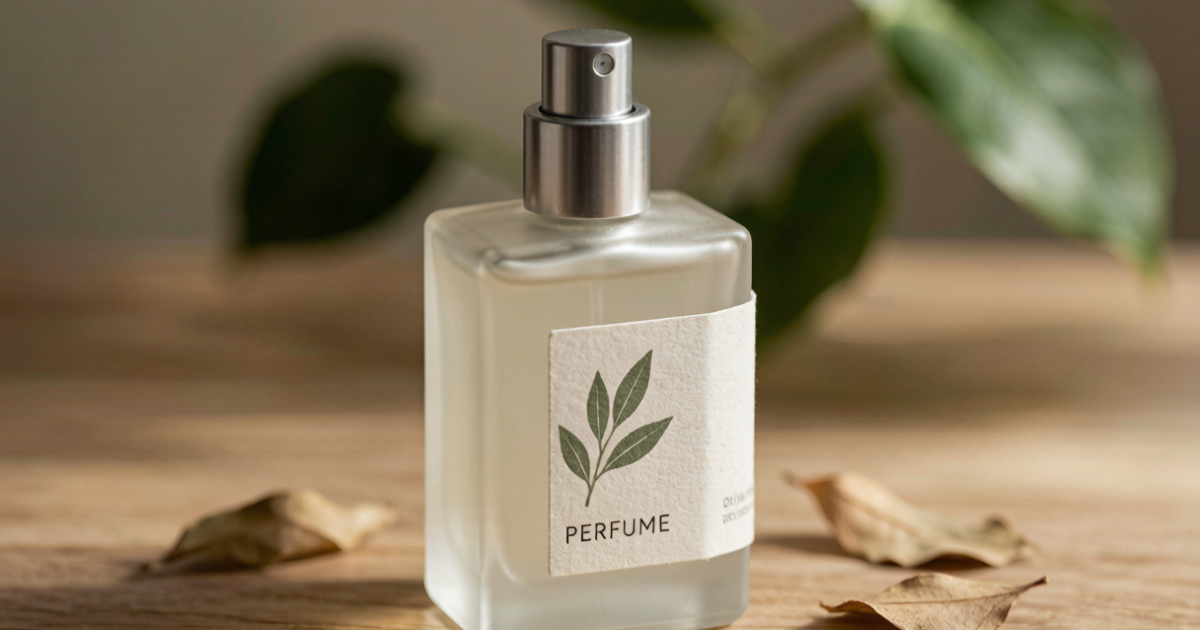
A refillable perfume glass bottle isn’t a niche product anymore. It’s becoming the default expectation for any fragrance brand that wants to sell in Europe, court Gen Z buyers, or position itself as sustainable. The shift happened faster than anyone predicted — and it’s rewriting the rules of how bottles are designed, manufactured, and priced.
In our experience working with brands across Asia, Europe, and North America, the refill question moved from “should we offer this?” to “how fast can we implement this?” in under two years. Here’s what’s driving the change and what it means for your sourcing strategy.
The Refillable Bottle Market: By the Numbers
The numbers tell a clear story. The global refillable perfume bottle market was valued at approximately $410 million in 2024 and is projected to reach $720 million by 2030, growing at a compound annual rate of 8.4%. That’s more than double the growth rate of the overall perfume packaging market.
But the headline number understates what’s happening in specific markets:
| Region | Refillable Adoption Rate | Key Driver |
|---|---|---|
| Europe | 34% of new launches | EU Packaging Regulation mandates |
| North America | 21% of new launches | DTC brand sustainability claims |
| Asia-Pacific | 12% of new launches | Luxury positioning, travel retail |
| Global average | 23% and rising | Brand differentiation + regulation |
Europe leads for one simple reason: they have to. The EU’s Packaging and Packaging Waste Regulation (EU Packaging and Packaging Waste Regulation) sets specific targets for reusable packaging. By 2030, a minimum percentage of packaging must be reusable or refillable. Perfume bottles aren’t exempt. If you sell in Europe, refillable isn’t optional — it’s compliance.
What Makes a Refillable Perfume Bottle Different
A refillable perfume glass bottle looks similar to a standard one. But the engineering underneath is fundamentally different. Here’s what changes:
The Refill Mechanism
Three refill systems dominate the market:
- Refill pouches (the Le Labo model). The customer buys a 100ml bottle once, then purchases 100ml refill pouches. They screw or pour the refill into the original bottle. Simple, effective, and the most widely adopted system.
- Refill cartridges (the Mugler model). The bottle accepts a proprietary cartridge that snaps or screws into place. More expensive to develop, but creates a locked-in refill ecosystem. Customers must buy your refills — they can’t use a competitor’s.
- In-store refill stations (the L’Occitane model). Customers bring their bottle to a retail location and refill from a bulk dispenser. Requires retail infrastructure, but offers the lowest per-ml cost and strongest sustainability story.
Each system has different manufacturing implications:
| System | Tooling Cost | Per-Unit Cost Increase | Customer Friction | Sustainability Score |
|---|---|---|---|---|
| Refill pouch | Low | +$0.30-$0.50 | Low | High |
| Cartridge | High | +$0.80-$1.50 | Medium | Medium |
| In-store station | N/A (retail) | Minimal | High | Very High |
For most brands, the refill pouch system is the practical starting point. It requires minimal changes to the bottle design — primarily a wider neck opening and a screw-on cap instead of crimp-on.
Bottle Design Modifications
Converting a standard bottle to refillable requires several design changes:
- Neck design. The neck needs to accommodate refill pouring. This typically means a wider neck (20mm instead of 15mm) with a threaded exterior for a screw-on cap.
- Cap mechanism. Crimp-on pumps don’t work for refillable bottles — you can’t remove them without destroying the collar. Screw-on caps are essential. Some brands use a hybrid: a decorative outer cap that screws off, revealing a refillable inner mechanism.
- Wall thickness. Refillable bottles get handled more. They’re opened, refilled, and closed repeatedly. Wall thickness typically increases by 0.5mm to improve durability.
- Base design. A stable base matters more for refillable bottles because the customer sets the bottle down during refilling. Heavy bases work well here.
Material Considerations
The glass itself doesn’t change — it’s still soda-lime or flint glass, depending on clarity requirements. But the secondary components do:
- Refill pouches are typically aluminum or PCR plastic. Aluminum is infinitely recyclable and offers better barrier properties. PCR plastic is cheaper and lighter.
- Screw threads need to be precise. Poor thread quality means leaks — and leaks destroy customer trust instantly. Work with a manufacturer who can guarantee thread tolerance within 0.05mm.
- Gaskets and seals matter more. Each refill cycle stresses the seal. Silicone gaskets outperform rubber for repeated use.
The Economics: Does Refillable Actually Save Money?
Here’s where it gets interesting. The upfront cost of a refillable system is higher. But the long-term economics can work in your favor.
Cost Comparison: Standard vs Refillable
Let’s run the numbers for a hypothetical brand selling a 50ml fragrance at $95:
| Cost Component | Standard Bottle | Refillable Bottle | Refill Pouch |
|---|---|---|---|
| Bottle (50ml) | $1.40 | $1.80 (+29%) | — |
| Cap/pump | $0.35 | $0.50 (screw-on) | — |
| Refill pouch | — | — | $0.65 |
| Refill pouch contents | — | — | $2.10 (50ml juice) |
| Total first purchase | $1.75 | $2.30 | — |
| Total refill purchase | — | — | $2.75 |
The refillable bottle costs 31% more to produce. But here’s the key: the customer pays for refills. If your 50ml retails at $95, your refill might retail at $65. The customer saves $30. You save on bottle cost ($1.75 vs $0.65 for the pouch).
Over three purchase cycles (initial + 2 refills), the brand’s packaging cost drops from $5.25 (3 × $1.75) to $4.05 ($2.30 + 2 × $0.65 + 2 × $0.50 cap reuse). That’s a 23% reduction in packaging COGS over the product lifecycle.
But the real win isn’t in packaging cost. It’s in customer retention.
The Retention Factor
Refillable systems lock in customers. When someone buys a refill pouch, they’re not browsing competitors. They’ve committed to your scent. According to industry data from McKinsey’s beauty report, brands with refill programs see 40-50% higher 12-month repurchase rates compared to standard bottle brands.
That retention value dwarfs the packaging cost savings. A customer who buys your $95 bottle and two $65 refills generates $225 in revenue. A customer who buys one $95 bottle and switches to a competitor generates $95. The refill system isn’t just a sustainability play — it’s a revenue strategy.
Regulatory Pressure: Why Europe Is Moving First
The EU’s PPWR (Packaging and Packaging Waste Regulation) isn’t a suggestion. It’s binding legislation with specific targets:
- By 2030: A minimum of 10% of packaging must be reusable
- By 2035: This rises to 20%
- By 2040: 30% reusable packaging required
Perfume bottles fall under these rules. Major brands like Chanel, Dior, and L’Oreal are already reformulating their packaging strategies. Smaller brands that ignore this will face market access issues.
The PPWR also mandates recyclability. Multi-material packaging (glass + metal + plastic glued together) is harder to recycle. Refillable systems, paradoxically, can be simpler to recycle because the components separate more easily — the glass bottle is reused, and the refill pouch is recycled separately.
For a deeper look at market trends driving these changes, see our perfume glass bottle market analysis.
What This Means for Sourcing
If you’re sourcing perfume glass bottles in 2026, refillable capability should be on your requirements list — even if you don’t plan to launch refills immediately. Here’s why:
- Mold design flexibility. Designing a bottle that can accept a screw-on cap (even if you initially ship with a crimp pump) gives you the option to switch to refillable later without retooling. The cost difference at mold stage is negligible.
- Supplier capability. Not every glass factory can produce precise screw threads at scale. Vetting this capability now saves time when you need to switch. Ask potential suppliers about their thread tolerance specifications and request samples.
- Decoration compatibility. Some decoration techniques interact poorly with refillable designs. For example, full-body frosting can create micro-abrasions that weaken the glass over multiple refill cycles. Silk screening and hot stamping are more durable for refillable bottles. Our decoration techniques guide covers which finishes work best for different bottle types.
- Testing requirements. Refillable bottles need additional QC testing: leak testing after repeated opening/closing cycles, thread wear testing, and seal integrity after multiple refills. Factor this into your quality control budget.
Case Studies: Brands Getting It Right
Le Labo (Estée Lauder)
Le Labo pioneered the refillable model in luxury fragrance. Their 50ml bottles come with a simple aluminum cap. Refills are sold in generic-looking pouches at a 20% discount. The branding is intentionally minimal — the bottle is a “refillable vessel” and the refill is a commodity. This positioning works because the brand’s identity is built on the scent, not the bottle.
Mugler (LVMH)
Mugler’s “Refill Bottle” system uses a proprietary fountain-style refill mechanism. The bottle has a specific valve system that only accepts Mugler refills. This lock-in strategy ensures customers stay within the Mugler ecosystem. The upfront tooling cost was significant, but the lifetime customer value justifies it.
Zielinski & Rozen
This boutique brand offers a hybrid: refillable bottles with a chain of refill stations in their retail locations. The bottles themselves are premium glass with heavy bases. The in-store refill experience adds theater and exclusivity. It’s a brand-building tool as much as a sustainability initiative.
Getting Started with Refillable Bottles
If you’re convinced (or at least curious), here’s the practical path:
- Start with a stock mold. Don’t invest in custom tooling until you’ve validated that your customers want refills. Pick a stock 50ml or 100ml bottle with a screw-on cap option.
- Design your refill pouch. Aluminum pouches offer the best sustainability story. PCR plastic is more affordable. Either way, the pouch should be branded — it’s part of the experience.
- Price the refill at 65-75% of the original bottle price. This gives the customer a clear financial incentive while protecting your margins.
- Test with a limited edition. Launch refillable as a special edition or a single SKU before rolling it across your entire line. This lets you gauge demand and iron out manufacturing issues.
- Tell the sustainability story. Customers won’t choose refills unless they understand the environmental benefit. A single refill replaces one bottle. Over 5 refills, that’s 5 bottles saved from landfill.
The Future: What’s Coming Next
The refillable trend is accelerating. Here’s what we expect in the next 18-24 months:
- Standardized refill interfaces. Industry groups are exploring standard refill neck sizes, similar to standard crown caps in beverages. This would reduce tooling costs across the industry.
- PCR glass in refillable bottles. Combining recycled glass with refillable design creates the strongest sustainability claim possible. SGD Pharma already offers bottles with 20% PCR content — expect this to reach 40% by 2028.
- Smart refill tracking. NFC chips embedded in the bottle cap that track refill cycles and offer loyalty rewards. The technology exists; the question is whether customers find it valuable or intrusive.
- Subscription refill models. DTC brands sending automatic refill deliveries based on usage patterns. This takes the refill model to its logical conclusion — the customer never runs out.
The refillable perfume glass bottle isn’t going away. It’s becoming the standard. The brands that adopt it now will have a head start — both in regulatory compliance and in customer loyalty.
Ready to explore refillable bottle options for your brand? We manufacture refillable perfume glass bottles with precision screw threads, multiple cap options, and full decoration capabilities. Get a quote and let’s discuss your refillable packaging strategy.