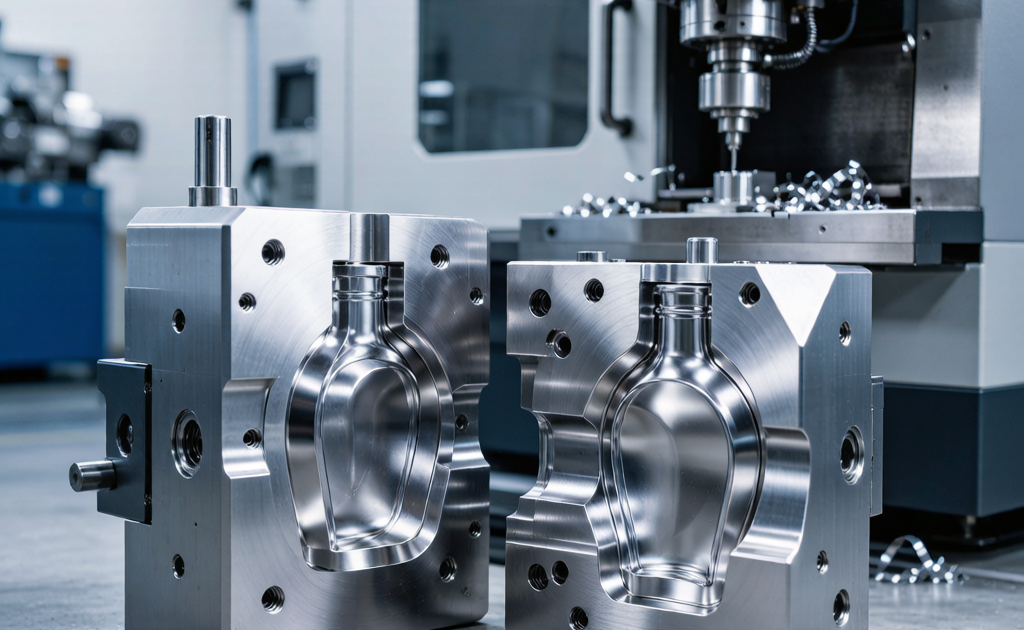
When I first walked through our mold-making workshop, I expected to see artisans hand-carving steel. What I found instead was a room full of CNC machines humming at 20,000 RPM, carving mold cavities to tolerances of ±0.01mm. That’s when it hit me — modern perfume bottle manufacturing isn’t about glassblowing anymore. It’s about precision engineering.
If you’re sourcing custom perfume bottles, understanding CNC mold making will save you money, time, and a lot of headaches. Let me walk you through what actually happens behind the scenes.
Why CNC Mold Making Matters for Perfume Bottles
The mold is the heart of bottle production. Every curve, every facet, every surface finish on your final bottle comes from the mold cavity. A poorly made mold means inconsistent wall thickness, visible parting lines, and bottles that wobble on the shelf.
CNC (Computer Numerical Control) machining replaced manual mold making because it delivers three things that handwork simply cannot:
- Repeatability — Mold #1 and Mold #100 produce identical bottles
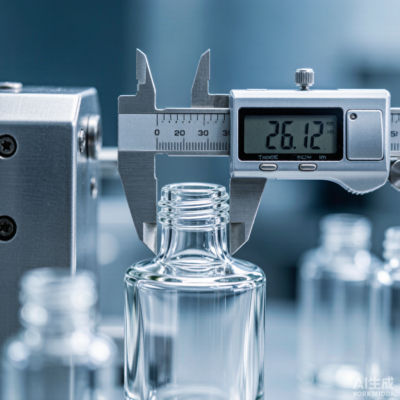
- Precision — Tolerances down to ±0.01mm (human hands manage ±0.1mm on a good day)
- Complex geometries — Asymmetric shapes, undercut details, multi-axis curves
The CNC Mold Making Process: Step by Step
Step 1: 3D Modeling and Mold Flow Analysis
Before any metal is cut, our engineers create a 3D CAD model of your bottle. But we don’t stop there. We run mold flow simulation software that predicts how molten glass will fill the cavity, where air traps might form, and where wall thickness could thin out.
This analysis catches problems before they cost money. I’ve seen designs that looked beautiful on screen but would have produced bottles with 4mm walls on one side and 1mm on the other. The simulation caught it. We adjusted the blank mold design. Crisis averted.
Step 2: Material Selection
Perfume bottle molds aren’t made from generic steel. The material choice depends on production volume and glass type:
| Mold Material | Hardness (HRC) | Best For | Expected Lifespan |
|---|---|---|---|
| P20 Steel | 28-32 | Low volume (<10,000 pcs) | 50,000-100,000 cycles |
| 718H Steel | 33-38 | Medium volume (10,000-50,000) | 200,000-300,000 cycles |
| S136 Stainless | 48-52 | High volume (50,000+) | 500,000+ cycles |
| Beryllium Copper | N/A (alloy) | Cooling inserts | 100,000 cycles |
For most perfume brands ordering 5,000-20,000 bottles, 718H steel is the sweet spot. It’s hard enough for longevity but doesn’t carry the premium price tag of S136.
Step 3: CNC Rough Machining
A CNC machine removes bulk material from the steel block, getting within 0.5mm of the final cavity shape. This uses larger cutting tools and higher feed rates — fast but not precise enough for the final surface.
The process typically takes 8-24 hours per mold half depending on bottle complexity.
Step 4: CNC Finishing and Engraving
Now the precision work begins. The machine switches to smaller tools (sometimes as small as 0.5mm diameter) and slower feed rates. This is where:
- Brand logos are engraved into the mold
- Decorative patterns are cut
- Thread necks are formed
- Parting line surfaces are machined flat
Finishing takes 12-36 hours and determines the final surface quality of your bottle. A surface finish of Ra 0.4μm (mirror-like) requires multiple passes with progressively finer tools.
Step 5: Polishing
Even CNC finishing leaves microscopic tool marks. Manual polishing removes these, achieving the surface finish your bottle will display. There are three standard levels:
- Mirror polish (Ra 0.05) — For clear glass bottles where every surface is visible
- Satin polish (Ra 0.4) — For frosted or colored glass where minor imperfections are hidden
- Texture polish — Deliberately textured surfaces (e.g., hammered effect)
Step 6: Assembly and Testing
The two mold halves are assembled, aligned with guide pins, and tested with a trial blow — we blow compressed air through the neck to check for leaks, air traps, or uneven expansion.
If the trial blow reveals issues, we go back to CNC for adjustments. Only after a clean trial blow does the mold go into production.
Tolerances That Actually Matter
Here’s something most suppliers won’t tell you: not every dimension needs the same tolerance. Over-specifying tolerances means paying for precision you don’t need.
| Dimension | Standard Tolerance | Why |
|---|---|---|
| Overall height | ±0.5mm | Visually inspected, not functional |
| Neck inner diameter | ±0.05mm | Must fit pump/crimp exactly |
| Wall thickness | ±0.3mm | Structural integrity |
| Base flatness | ±0.2mm | Bottle must stand straight |
| Logo engraving depth | ±0.1mm | Visual consistency |
The neck inner diameter is the tightest tolerance for good reason. If it’s 0.1mm too small, your pump won’t insert. Too large, and it leaks. We hold this to ±0.05mm on every mold we make.
How Long Does CNC Mold Making Take?
I’ll be honest — this is where most projects get delayed. Here’s a realistic timeline:
| Phase | Time | Notes |
|---|---|---|
| 3D modeling + mold flow | 2-3 days | Includes client approval |
| Material procurement | 3-5 days | Faster if stock available |
| CNC rough machining | 1-2 days | Per mold half |
| CNC finishing + engraving | 2-3 days | Depends on complexity |
| Polishing | 1-2 days | |
| Trial blow + adjustments | 1-2 days | May need re-machining |
| Total | 10-17 days | For a standard custom mold |
Complex molds with multi-cavity designs or intricate decorations can take 20-25 days. If a supplier promises 5 days for a custom mold, run.
Cost Breakdown: What You’re Actually Paying For
A single-cavity custom mold for a perfume bottle typically costs $1,500-$4,500. Here’s where that money goes:
- Raw material (steel): 15-20%
- CNC machining time: 40-50%
- Polishing labor: 15-20%
- Engineering/design: 10-15%
- Trial and adjustments: 5-10%
Multi-cavity molds (2, 4, 8, or 16 cavities) cost more upfront but reduce per-bottle cost significantly. For orders above 20,000 bottles, a 4-cavity mold pays for itself in time savings alone.
Common Mistakes Buyers Make with Custom Molds
Mistake 1: Not Owning the Mold
Some factories retain mold ownership, locking you to that supplier. Always specify in your contract that the mold is your property. If you ever switch suppliers, you should be able to take your mold with you.
Mistake 2: Overcomplicating the Design
Every undercut, every asymmetric curve, every complex facet adds mold cost and production risk. I’ve seen brands add decorative features that increased mold cost by 60% but added zero perceived value for end consumers. Keep it elegant, not complex.
Mistake 3: Skipping the Trial Blow
If your supplier doesn’t do a trial blow before full production, you’re gambling with your entire order. A trial blow costs $200-500. A failed production run costs $5,000-15,000.
Mistake 4: Wrong Material for Wrong Glass
If you’re producing colored glass (especially cobalt blue or amber), the glass is more abrasive and wears molds faster. Specify S136 stainless for colored glass runs above 30,000 pieces.
Why We Invested in 5-Axis CNC
Most factories use 3-axis CNC machines. They’re cheaper but require multiple setups for complex geometries — each setup introduces alignment error.
We use 5-axis CNC machines that can machine a mold half in a single setup. This means:
- No alignment errors between setups
- Tighter overall tolerance accumulation
- Faster turnaround (single setup vs 3-4 setups)
- Ability to machine undercuts and complex curves
The investment was significant — a 5-axis machine costs 3-4x more than a 3-axis. But the quality difference is visible in every bottle we produce.
How to Specify Your Mold Requirements
When requesting a quote for custom perfume bottles, include these details:
- 3D drawing or sketch (STEP, IGES, or even a hand drawing with dimensions)
- Glass type (flint clear, frosted, colored)
- Volume (ml)
- Estimated order quantity (determines mold material and cavity count)
- Neck finish (standard or custom pump compatibility)
- Decoration on glass (engraved logo, pattern, texture)
- Surface finish (mirror, satin, texture)
With these details, a competent manufacturer can give you an accurate mold quote within 48 hours.
Frequently Asked Questions
What is CNC mold making for perfume bottles?
CNC mold making uses computer-controlled machines to carve precision mold cavities from steel blocks. These molds shape molten glass into perfume bottles with tolerances as tight as ±0.01mm, ensuring consistent bottle quality across production runs.
How much does a custom perfume bottle mold cost?
A single-cavity custom mold ranges from $1,500 to $4,500 depending on bottle complexity, mold material, and surface finish requirements. Multi-cavity molds cost more upfront but reduce per-bottle production cost for larger orders.
How long does it take to make a custom perfume bottle mold?
A standard custom mold takes 10-17 days from 3D approval to trial blow. Complex designs with intricate decorations or multi-cavity configurations can take 20-25 days. Always include mold-making time in your project timeline.
What steel is best for perfume bottle molds?
718H steel (HRC 33-38) is ideal for most perfume bottle orders between 10,000-50,000 pieces. For higher volumes or colored glass production, S136 stainless steel (HRC 48-52) offers superior wear resistance and longer mold life.
Do I own the custom mold I pay for?
You should. Always specify mold ownership in your manufacturing contract. Reputable suppliers include mold ownership clauses by default. If a supplier refuses to grant you mold ownership, that’s a red flag — they may be trying to lock you into their production.
—
Ready to start your custom perfume bottle project? Contact Huanshi for a free mold feasibility assessment and quote. Our 5-axis CNC workshop is ready to bring your design to life.