A fragrance brand’s most valuable asset after the scent itself is the silhouette of the bottle on the shelf. It is also the asset most frequently lost by accident — not to a determined counterfeiter, but to a supplier who reused a mold, a tooling deposit nobody documented, or a design brief that was emailed to three factories before anything was signed.
Intellectual property in perfume packaging is fragmented across four legal systems that protect different things for different periods at different costs, and most brands operate with a vague belief that “the design is ours” without any document that says so. This article maps what each IP right actually covers for a glass flacon, explains the tooling question that matters more than any registration, and sets out a practical checklist to run before you brief a supplier.
The Four Rights That Touch a Perfume Bottle
A bottle is not one piece of IP. It is several, and each is enforceable in a different way.
Design rights protect the appearance of the article — shape, ornamentation, surface decoration. In the EU this is the Registered Community Design (RCD); in the US it is a design patent. This is the right that protects a silhouette.
Copyright protects artistic works. In most jurisdictions it does not cover a purely functional shape, but it can cover original surface artwork, illustration, custom typography and photography. Screen-print artwork and label illustration are copyright, not design.
Trademark protects signs that identify commercial origin — brand names, logos, and in some cases a shape that has acquired distinctiveness through use. Shape marks are hard to obtain and easy to lose.
Patents protect technical function — a pump mechanism, a refill cartridge, a closure with a specific sealing geometry. Utility patents, not design patents.
A single flacon might rely on a design registration for its shape, copyright on its print artwork, a trademark on the embossed logo, and a patent on its refill mechanism. If any one of those is unregistered or undocumented, that layer of protection is essentially absent — because unregistered rights are far harder to prove.
| Right | What it protects | Term (typical) | Cost level | Enforcement difficulty |
|---|---|---|---|---|
| Registered design (EU RCD) | Bottle shape, surface ornamentation | 5 years, renewable to 25 | Low–medium | Medium — registration certificate is strong evidence |
| Design patent (US) | Ornamental design of the article | 15 years from grant | Medium–high | Medium |
| Copyright | Artwork, illustration, photography | Life + 50–70 years | Very low (automatic) | High — needs proof of authorship and date |
| Trademark | Brand name, logo, distinctive shape | 10 years, renewable indefinitely | Low–medium | Low — strong statutory framework |
| Utility patent | Pump, closure, refill mechanism | 20 years | High | Medium |
The Tooling Question Matters More Than the Registration
Here is the uncomfortable truth about perfume bottle IP: in practice, most design copying happens through tooling, not through photography. Whoever physically holds the mold controls whether the shape can be reproduced.
That is why the mold ownership clause in your supply agreement does more day-to-day work than any registration certificate. A properly written clause establishes four things: that the tool was paid for by you (or is a specifically identified asset regardless of who paid), that the tool is your property, that the tool must be marked as yours, and that it will be released to you or your nominated party on request — with a stated mechanism and timeline.
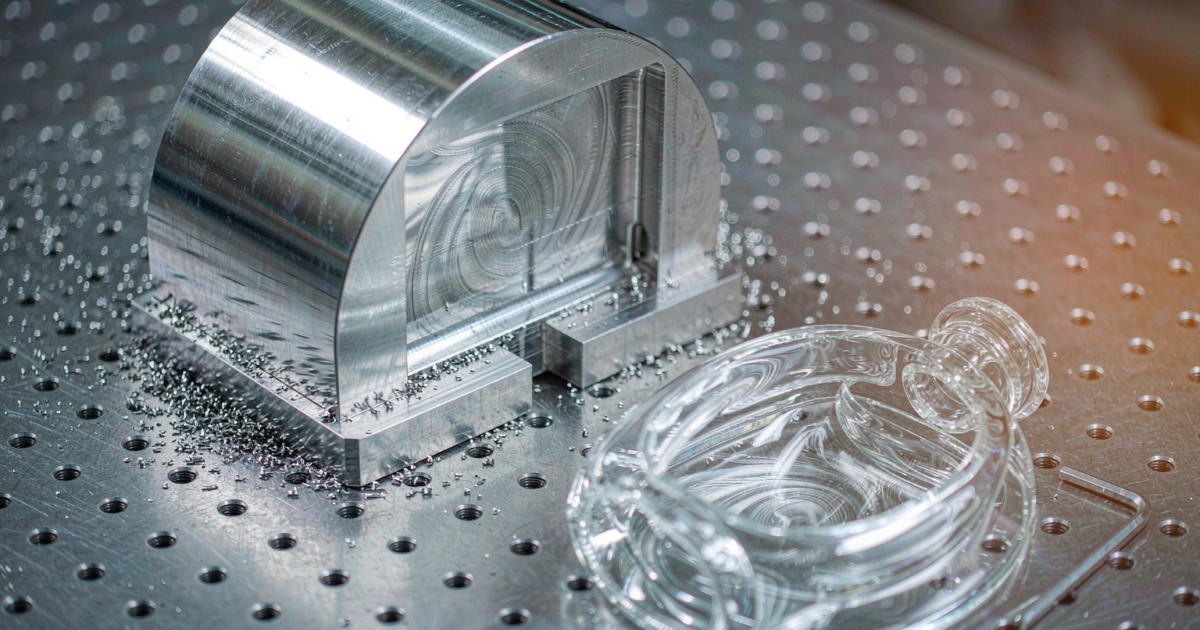
Without that clause, a supplier can legitimately argue that a mold they commissioned and hold is theirs, even if your purchase order included a tooling charge. This is not usually malice. It is the default outcome when nobody writes anything down. The mechanics of getting it right are set out in our guide to mold ownership clauses in perfume contracts, and the technical side of what a tool actually consists of — cavities, blank molds, plungers, and which of them need to be named individually — is covered in CNC mold making for perfume bottles.
Two practical habits follow. First, photograph and record every tool at the moment of approval, with the tool number visible. Second, put the tool number on the purchase order, not just the product code. A product code is a description; a tool number is an asset.
What a Registered Design Actually Covers — and Where It Stops
A registered design protects the appearance of the whole or part of a product resulting from features such as lines, contours, colours, shape, texture and materials. For a flacon, that means the silhouette, the shoulder geometry, the cap form, and applied surface ornamentation can all be protected — but only as they appear in the representations you file.
That last phrase is where brands lose ground. The protection extends only to what the drawings show. If you file a single front view of an oval bottle and a competitor produces a rotated variant with a different shoulder, the registration may not reach it. Filing multiple views — front, side, top, perspective, and where relevant a detail view of the cap — costs little more and materially widens the scope.
Three limits worth knowing before you spend money:
Function is not protected. If a feature exists only to make the bottle fillable or the pump seat correctly, design protection will not cover it. A neck finish is a functional interface; the shape of the shoulder above it is not.
Public disclosure before filing can destroy novelty. Showing the design at a trade fair, in a lookbook, on Instagram, or to a supplier without an NDA may start a clock. Most jurisdictions offer a 12-month grace period for the designer’s own disclosures, but relying on it is a gamble; file first where the design matters commercially.
Registered designs are territorial. An EU registration does nothing in the US, the UK, China or the Gulf. If your market is genuinely global, budget for the three or four jurisdictions that account for most of your revenue rather than all of them.
Non-Disclosure Agreements That Actually Protect You
Most NDAs in packaging are decorative. They are signed, filed, and never read again. An NDA that will survive a dispute needs four specific elements:
- A definition of confidential information that includes drawings, CAD files, tooling specifications and sample bottles — not just “business information”.
- A named recipient list or a defined class of personnel, so that “our employees” does not become an unbounded category.
- A stated term — typically 3 to 5 years, and critically, a survival clause for trade secrets that outlasts the term.
- A remedy clause naming injunctive relief, since damages in packaging disputes are notoriously hard to quantify.
Send the NDA before the brief, not after. A factory that has already seen your drawings has already seen your drawings; the signature afterwards protects nothing but the relationship.
Protecting a Shape: Where Brands Win and Lose
Shape protection disputes in fragrance packaging tend to turn on three questions, and the answers are not intuitive.
Is the shape distinctive or is it the category norm? A cylinder with a spherical cap is the visual grammar of the category. No registry will grant exclusivity over it, and no court will enforce it. A faceted asymmetric form with an integrated collar is a different proposition entirely.
Is there a paper trail showing independent creation? If your design brief, dated CAD revisions and supplier correspondence show a clear chain from concept to tool, you can demonstrate authorship. If the shape emerged from a supplier’s catalogue and was “adjusted”, you cannot.
Did the alleged copy take the whole look or just one feature? Enforcement succeeds on overall impression. A competitor who copies the silhouette but changes the cap material may still infringe; one who copies only the base curve probably will not.
This is also the point where the OEM/ODM distinction becomes legally relevant rather than a commercial label. In an ODM arrangement the supplier’s existing design is licensed to you, and exclusivity is whatever the contract says — often nothing. The difference is set out in OEM vs ODM perfume bottles, and it determines whether you own anything at all at the end of the project.
Counterfeit Risk Inside the Supply Chain
The realistic threat for most mid-sized brands is not a factory in another province cloning the bottle. It is the factory that made it running an extra shift.
The mechanism is boring: a mold exists, glass is cheap, and the decoration subcontractor has your artwork file. Without a contractual restriction, producing 5,000 extra units for a “domestic customer” requires no particular malice. Three controls reduce this materially:
- Tool custody. If the tool is yours and marked, production outside your purchase orders is a documented theft rather than a grey area.
- Artwork control. Supply print files as print-ready separations with a job number, not as editable source. Ask for the artwork files to be returned or destroyed at project end.
- Component traceability. Pumps and caps carry batch codes. If your pump supplier can tell you which batch went where, an unexpected run becomes visible.
None of this is airtight. All of it raises the cost of casual copying, which is the realistic objective. The technical reality is that a tool wears out — the lifecycle of a blow mold and what happens to your design when it reaches end of life is covered in perfume bottle mold lifespan.
A Practical Checklist Before You Brief a Supplier
Run this before the first technical drawing leaves your office.
| Step | Action | Why it matters |
|---|---|---|
| 1 | File the design registration in your primary markets, or confirm the 12-month grace period position | Public disclosure can destroy novelty |
| 2 | Prepare a one-page NDA covering drawings, CAD, tooling specs and samples | Standard corporate NDAs usually miss tooling |
| 3 | Issue the brief with a document reference and date | Establishes the chain of authorship |
| 4 | State in the RFQ that the tool will be your property and must be marked | Prevents the default “supplier owns the tool” outcome |
| 5 | Require written confirmation that no existing catalogue design is being reused | Separates custom from stock |
| 6 | Name the tool number on the purchase order and in the sample approval record | Converts a description into an asset |
| 7 | Agree artwork handling and return at project close | Removes an easy path to overproduction |
| 8 | Record mold condition and shot count at handover, and review annually | A worn tool is a replaced tool — know when |
Steps 4 and 6 cost nothing and prevent the single most common loss of design control in this industry.
One habit ties the list together: keep a project file that a lawyer could read without you. Dated briefs, signed NDAs, CAD revision history, sample approval records with photographs, and the purchase order naming the tool number. If a dispute ever reaches the point where someone asks you to prove that the design was yours and that the tool was yours, that folder is your case. Brands that can produce it usually settle quickly; brands that cannot usually absorb the loss and redesign.
What It Costs, Roughly
Design registration in the EU for a single design runs to a few hundred euros in official fees plus professional fees, and covers five years. A US design patent costs considerably more — several thousand dollars including drafting and prosecution — and takes a year or more to grant. Trademark registration sits between the two.
Set against the cost of tooling a second mold because the first one walked away, or of watching a competitor ship your silhouette at 30% below your price, the registration budget is small. The mistake is not overspending on IP. It is spending on registration while leaving the tool undocumented, which is the equivalent of insuring the contents and leaving the door open.
FAQ
Can I protect the shape of a perfume bottle?
Yes, in most major markets — through a registered design in the EU and UK, or a design patent in the US. Protection covers the appearance shown in your filed drawings, so file multiple views. Purely functional features, such as a standard neck finish, cannot be protected this way.
Who owns the mold if I paid a tooling charge?
Only if the contract says so. Paying a tooling charge does not automatically transfer ownership in most jurisdictions; ownership follows the agreement, not the invoice. A written clause stating that the tool is your property, is marked as yours, and must be released on request is what makes ownership real.
Do I need an NDA before sending drawings to a supplier?
Yes, and it should be signed before the brief is sent, not after. Make sure the definition of confidential information explicitly includes CAD files, tooling specifications and physical samples — most generic NDAs cover only business and financial information, which leaves your design exposed.
Is a design registration valid worldwide?
No. Design rights are territorial. An EU registration has no effect in the US, China, the UK or the Gulf. Register in the markets that generate most of your revenue, and prioritise the jurisdictions where you know the bottle will be manufactured or sold at volume.
What can I do if a supplier sells my bottle design to another buyer?
First establish that the tool is yours under contract, then issue a written demand for return of the tool and cessation of production. Registered design or trademark rights give you statutory grounds; unregistered rights require you to prove authorship and date, which is why the paper trail matters. In practice, the tool custody clause is the fastest lever available.