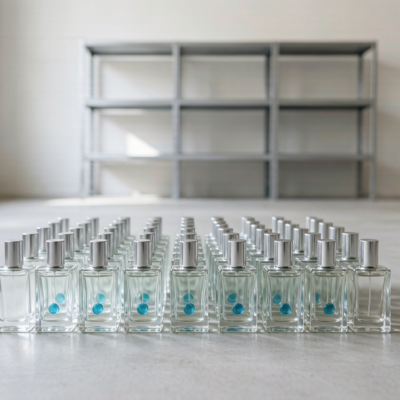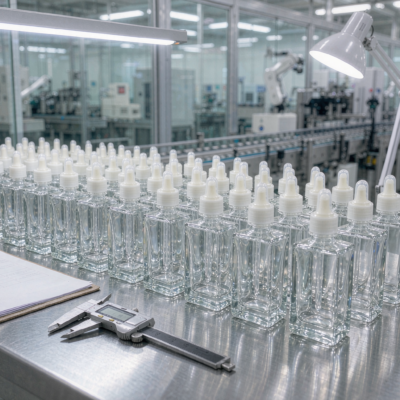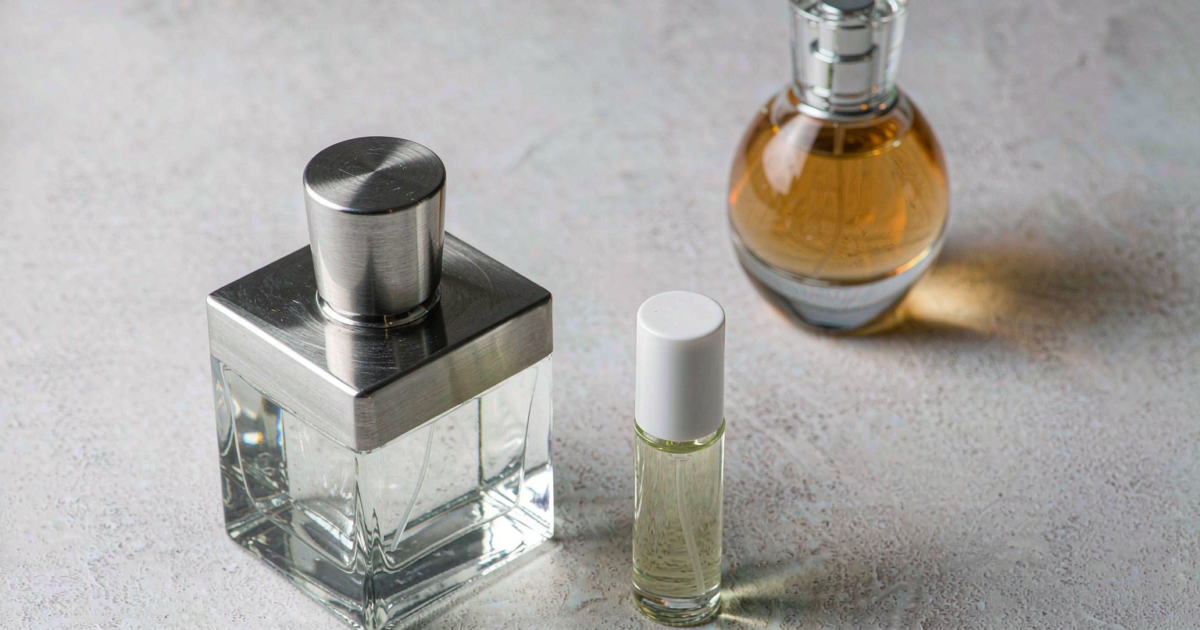
The American indie fragrance segment has matured into something the glass supply chain can no longer treat as a novelty. Five years ago, an indie brand founder ordering 1,000 bottles was an exception that factories handled reluctantly. Today that founder is a predictable buyer type with clear, consistent preferences — and those preferences differ from both the legacy designer houses and the Gulf premium market in ways that change what a good bottle specification looks like.
Working through hundreds of indie packaging briefs, a pattern emerges. Indie brands in the US are not trying to imitate designer flacons. They are optimising for three things at once: a distinct shelf identity that photographs well on Instagram and TikTok, a total landed cost that survives a direct-to-consumer margin, and a launch cadence fast enough to test a scent every few months. This article breaks down how those three pressures translate into actual glass, closure and decoration choices, and where indie brands most often overpay or get stuck.
The Indie Buying Pattern: Small Runs, Fast Iteration
The defining characteristic of the US indie buyer is not small volume — it is frequent volume. A typical indie house launches two to four scents per year, each in the 500–3,000 unit range, rather than one 50,000-unit program. That rhythm has direct consequences.
Stock moulds dominate. Custom tooling only makes sense when a shape will carry multiple scents for years. For a brand testing the market, a stock 50 ml or 100 ml flacon with distinctive decoration beats a custom mould on every financial measure. Our guide to perfume bottle prototype versus production walks through the decision point where tooling starts to pay back.
Decoration carries the identity. When the glass is a catalogue shape, the brand lives in the coating, the print, the collar and the cap. This is why indie brands spend a disproportionate share of packaging budget on decoration relative to designers, who can rely on proprietary bottle geometry.
Repeat orders, not one big order. Indie brands reorder every three to six months. That changes what matters in a supplier relationship: consistent colour match across reorders matters more than the price on the first PO, because a shade shift between batch two and batch three is visible on the brand’s own product page.
| Buying trait | Typical range | Effect on specification |
|---|---|---|
| Launch volume per scent | 500–3,000 pcs | Stock mould; decoration becomes the differentiator |
| Scents per year | 2–4 | One bottle reused across scents, differentiated by colour and print |
| Reorder cycle | 3–6 months | Colour consistency and repeat-order lead time outrank first-PO price |
| Custom tooling decision | Usually after 2–3 successful launches | Tooling budget follows proven demand, not the launch |
What Indie Brands Prioritise in 2026
Four priorities show up in nearly every US indie brief, and they are not the priorities a traditional buyer would guess.
Photographic performance. The bottle must look distinctive in a 1080 × 1080 crop on a white background and in a hand-held video. This favours strong silhouettes — heavy shoulders, a wide base, an unusual cap — over intricate surface detail that disappears at thumbnail size. A subtle engraved pattern that looks refined in the hand can read as blank glass on a phone screen.
Perceived weight and hand feel. Indie consumers are used to premium unboxing content and notice a light bottle. A 50 ml flacon in the 140–190 g range reads as considered; below 110 g it reads as generic, regardless of the juice inside. Freight cost rises with weight, so this is a genuine trade-off, not a free win.
Refill and reuse credibility. Sustainability claims are now standard in indie marketing, and a bottle marketed as refillable must actually survive refilling. That has a concrete specification consequence: the neck finish and closure must tolerate repeated open/close cycles, and the coating must resist alcohol contact on the outside of the bottle during refill.
Unboxing coherence. Bottle, cap, collar and box are judged together. A gold collar on a matte black bottle in a rigid box is a system; the same collar with a mismatched cap finish reads as a sourcing compromise. Indie brands increasingly specify finishes as a matched set — same plating family on cap and collar — which is easier to control when both come from one supplier.
Bottle Shapes Winning in 2026
Shape preference in the US indie segment has consolidated around a few families, each solving the photographic problem in a different way.
Heavy-shouldered square and rectangular flacons. The dominant silhouette. Flat front panels provide a clean surface for a label or direct print, and the straight edges catch light in a way that photographs sharply.
Round-shouldered cylinders with a thick base. The thick base — sometimes a 12–15 mm solid glass punt — adds weight and creates the optical effect of the liquid floating. Popular for amber and woody compositions where the colour is the hero.
Small-format 30 ml and 10 ml formats. Travel and sampling have become a genuine revenue line rather than a marketing cost. Our article on mini and travel perfume bottles wholesale covers the format economics; the relevant packaging note here is that indie brands increasingly want the 10 ml to visually echo the 50 ml, which usually means a shared cap family rather than a shared body.
Asymmetric and sculptural shapes. A smaller but visible group — bottles with an offset neck, a slanted shoulder or a carved side. These are almost always custom tooling and are chosen by brands with an established design language and the volume to support it.
Closures: Pumps, Caps and the Refill Question
The closure is where indie brands most often discover a hidden cost, because the closure interacts with the filling line and with the consumer’s daily experience.
Crimp versus screw. Crimp pumps give a cleaner look and a more secure seal but require a crimping tool at the filling site and make refilling impractical. Screw pumps allow refill and consumer handling but introduce torque and leakage variables. For refill-positioned brands, screw is effectively mandatory.
Cap weight and material. Heavy zamac or aluminium caps are the single most effective way to lift perceived quality per dollar. A 30–45 g metal cap on a 150 g bottle transforms the hand feel. The cost is real but small relative to a custom mould, and the visual payoff is immediate.
Collar as a design element. A plated collar hides the neck seam and adds a jewellery cue. It also adds a supply dependency: the collar must be dimensionally matched to the specific neck finish, so a mid-program neck change is expensive. Standardise the neck finish across the range early.
Spray quality. The actuator and dip tube determine whether the product feels premium in use. A bottle that looks expensive and sprays a coarse, dripping mist undermines the whole proposition. Specify actuator output per stroke and test with the actual juice viscosity — alcohol-based EDPs and oil-heavy extraits behave very differently through the same pump.
Decoration That Fits an Indie Budget
Decoration is the highest-leverage spend for an indie brand, and also the easiest to waste. The table below reflects typical setup and per-piece relationships rather than quotes, because actual numbers depend on quantity and geometry.
| Decoration | Setup burden | Per-piece cost | Best used for | Main risk |
|---|---|---|---|---|
| Spray coating, solid colour | Low | Low | Base colour across the whole range | Colour drift between reorders |
| Gradient or two-tone spray | Moderate | Low–moderate | A signature look at accessible cost | Visible mask line; batch consistency |
| Screen print, 1–2 colours | Low | Low | Front-panel logo and volume | Wear on coated surfaces; ink adhesion |
| Hot stamping foil | Moderate | Moderate | Metallic logo without plating | Failing on textured or curved surfaces |
| Laser engraving through coating | Low | Low–moderate | Permanent, tactile brand mark | Contrast depends on coating thickness |
| Electroplated collar | Moderate | Moderate | Neck jewellery cue | Adhesion after washing; colour match with cap |
| Vacuum metallization, full body | High | Moderate | Mirror or saturated metallic body | Wear at high-abrasion edges |
Two rules save indie brands money here. First, combine a low-cost coating with one high-impact element — usually the cap — rather than spreading budget thinly across five decorations. Second, keep the print artwork within one or two colours; each additional colour adds a screen, a setup, and a registration risk on a curved surface.
Budget allocation across the whole pack is covered in our perfume packaging budget breakdown, which is worth reading before locking a decoration plan, because decoration decisions often consume budget that the carton and insert need more.
MOQ Reality and the Stock Mould Strategy
The practical MOQ picture for US indie brands has loosened considerably. Stock mould flacons with standard decoration are commonly available from 3,000–5,000 pieces per colour, and some suppliers will run 1,000–2,000 with a surcharge. Below that, per-piece cost rises steeply because setup dominates.
The strategy that works for most indie houses is a two-tier structure: a stock bottle for launches, and a custom mould only once a scent has proven itself over two or three reorder cycles. When that moment comes, our guide to perfume bottle mold lifespan is the relevant reference — tooling has a finite production life, and the contract should state who owns the mould and how many shots it is rated for.
There is also a quiet cost trap in mixing suppliers. Buying glass from one factory, caps from a second and decoration from a third looks cheaper on paper but shifts the integration risk onto the brand. When a cap does not seat, the glass supplier blames the cap, the cap supplier blames the neck, and the brand absorbs the loss. A single accountable supplier for the assembled pack is usually worth a few percent on unit price.
Compliance Paperwork Indie Brands Forget
US indie brands often discover compliance requirements at the worst moment — when a retailer or a fulfilment partner asks for documentation the brand has never requested from its factory.
Material and migration declarations. Food-contact-adjacent and cosmetic packaging expectations require evidence that the glass and any internal coating are suitable for fragrance contact. Ask for a declaration of compliance at the sampling stage, not after the PO.
Heavy metals and coating composition. Decoration chemicals — plating baths, inks, lacquers — are where restricted substances appear. A supplier that cannot state the composition of its coating system is a supplier that has not been asked before, which is itself informative.
Prop 65 and state-level labelling. California’s requirements affect labelling and, indirectly, material choices. The documentation you need from the supply chain for these claims is the same set described above.
Recyclability and refill claims. A “refillable” or “recyclable” claim needs to survive scrutiny. A bottle with a bonded multilayer coating may not be recyclable in practice even if the glass underneath is. If the marketing claim matters, specify it as a requirement and ask how the supplier supports it.
Our checklist for custom perfume bottle manufacturers sets out the questions that surface these gaps before they become a launch delay, and the broader regulatory picture for fragrance packaging into the US and EU is covered in our guide to FDA cosmetic packaging regulations-eu-cosmetic-packaging-perfume-glass/”>FDA and EU cosmetic packaging rules.
Where Indie Preferences Are Heading
The direction of travel for 2026 is toward fewer, better-specified components. Brands are consolidating to one or two bottle families, standardising the neck finish across the range so caps and pumps are interchangeable, and spending the saved complexity budget on a distinctive cap or a signature coating. The brands that struggle are the ones treating each launch as a fresh design project with a new bottle, a new cap and a new decoration supplier — the coordination cost quietly consumes the margin the product needed.
FAQ
What is a realistic MOQ for a US indie perfume brand’s first order?
For a stock mould flacon with standard spray coating and one-colour print, 3,000–5,000 pieces per colour is the normal floor, and some suppliers will accept 1,000–2,000 with a per-piece surcharge. Custom tooling pushes the floor to roughly 10,000–30,000 pieces depending on shape complexity, which is why most indie brands start on stock glass.
Should an indie brand choose crimp or screw closures?
Choose crimp if the bottle is a single-use format and you want the cleanest look and the most reliable seal. Choose screw if refilling is part of the product promise, since crimped bottles cannot be practically refilled by the consumer. Many indie brands run crimp on the 50 ml hero size and screw on refill or travel formats.
How much does decoration add to the bottle cost?
It depends heavily on volume, but the pattern is consistent: a solid spray coating is the cheapest way to change the bottle’s appearance, screen printing is cheap per piece with modest setup, and plating or full-body metallization carries the highest setup. For a typical indie order, decoration commonly adds a meaningful fraction on top of bare glass cost — which is why concentrating spend on one hero element, usually the cap or collar, gives the best perceived-value return.
Why does my bottle colour not match between reorders?
Because spray coatings are mixed and applied per batch, and small differences in film thickness or oven conditions shift the shade. The fix is procedural: approve a physical master sample, keep it at the factory, and require each reorder to be matched against it under defined lighting. Specify a tolerance and a remedy in the PO rather than discovering the drift on your own product photography.
Can I get a custom bottle shape at indie volumes?
Rarely at launch volumes. Tooling for a custom flacon typically requires 10,000–30,000 pieces per shape to be economical, plus 25–45 days of tooling lead time before production. The practical path is to launch on a stock shape with strong decoration, then commission tooling once a scent has proven repeat demand across two or three cycles.