The perfume glass bottle market in Asia-Pacific is growing faster than almost any other region. Euromonitor market research data shows fragrance sales across Asia-Pacific rose 8.7% year-over-year in 2025, with China, India, and Southeast Asia leading the charge. That growth is not just about more people buying perfume. It is about a shift in how perfume is sold, who buys it, and what those buyers expect from packaging. For glass bottle manufacturers and fragrance brands, this shift creates a window of opportunity that will not stay open forever.
This article examines the forces driving Asia-Pacific demand for perfume glass bottle packaging. We look at market size, consumer behavior trends, regulatory developments, and the practical implications for buyers sourcing bottles from China. Whether you are a Western brand entering Asia or a local player scaling production, understanding these dynamics will help you make smarter sourcing and design decisions.
Market Size and Growth Trajectory
Asia-Pacific accounted for approximately $9.8 billion in fragrance retail sales in 2025. Glass packaging represents 12–15% of that value at the manufacturer level, putting the regional perfume glass bottle market at roughly $1.2–$1.5 billion annually. Growth is projected at 6.5% CAGR through 2030, driven by rising disposable income, urbanization, and the expansion of e-commerce fragrance retail.
China is the single largest market, contributing 38% of regional fragrance sales. But the most exciting growth is in India and Southeast Asia. India’s fragrance market grew 14.2% in 2025, fueled by a young population, increasing premiumization in tier-2 and tier-3 cities, and the rise of direct-to-consumer brands like Bombay Perfumery and Naso. Southeast Asia—Vietnam, Indonesia, Thailand, and the Philippines—collectively grew 11.3%, with online fragrance sales doubling in Vietnam alone.
The glass bottle segment within this market is more concentrated than the fragrance market itself. Three countries—China, India, and Japan—produce over 80% of the region’s perfume glass bottles. China dominates export supply, with factories in Shandong, Jiangsu, and Guangdong provinces serving both domestic brands and international buyers. Our factory, located in Jiangsu, ships over 3 million perfume bottles annually to 25 countries, with Asia-Pacific representing 35% of export volume.
Consumer Trends Shaping Bottle Design
Asia-Pacific consumers have distinct preferences that differ from Western markets. Understanding these differences is critical for brands designing packaging for the region.
Smaller sizes dominate. In Asia, 30 ml and 50 ml bottles outsell 100 ml by a wide margin. Japanese consumers prefer 20 ml travel sizes for handbags. Indian consumers favor 30 ml as an entry price point. Chinese gifting culture drives demand for 50 ml sets with matching body lotion. A Western brand launching in Asia with only 100 ml SKUs will miss 60–70% of the addressable market.
Aesthetics lean minimalist or maximalist, rarely in between. Korean and Japanese brands favor clean lines, frosted glass, and muted color palettes. Chinese luxury consumers, by contrast, respond to heavy bases, gold foil, and intricate embossing. Indian festive gifting segments prefer bright colors and ornate decoration. There is no single “Asian aesthetic.” There are multiple aesthetics tied to specific markets and occasions.
Sustainability is rising fast. A 2025 McKinsey survey found that 67% of Chinese Gen Z consumers consider sustainable packaging important when choosing a fragrance. Post-consumer recycled (PCR) glass, lightweight designs, and refillable formats are gaining traction. The EU’s EU Packaging and Packaging Waste Regulation regulations are also influencing Asian brands that export to Europe, creating demand for compliant packaging even in domestic markets.
E-commerce packaging matters. Over 45% of fragrance sales in China now happen online. That means the unboxing experience—protective insert design, bottle stability in transit, and photogenic presentation—is as important as shelf appeal. Bottles that photograph well under smartphone lighting and survive courier drop tests are winning designs.
Regulatory Landscape: What Buyers Need to Know
Asia-Pacific is not a single regulatory zone. Each country has its own packaging standards, import requirements, and environmental regulations. Here is a summary of the key frameworks affecting perfume glass bottle sourcing.
| Country / Region | Key Regulation | Impact on Glass Bottles |
|---|---|---|
| China | GB 4806.5-2016 (Food-contact glass) | Migration limits for lead and cadmium; applies to fragrance bottles if labeled as cosmetic packaging |
| India | BIS IS 9873 (Glass containers) | Mechanical strength and thermal shock standards for glass packaging |
| Japan | Food Sanitation Law + JIS standards | Strict heavy-metal limits; requires testing certificates for imported glass |
| South Korea | MFDS cosmetic packaging standards | Labeling requirements and material safety data for glass containers |
| ASEAN (harmonized) | ASEAN Cosmetic Directive | Packaging must not react with contents; glass is generally preferred over plastic |
| EU (for exporters) | PPWR + EPA Extended Producer Responsibility obligations | Recyclability labeling, recycled content targets, producer registration |
For brands selling in multiple Asia-Pacific markets, the safest approach is to specify glass that meets the strictest standard—typically Japan’s Food Sanitation Law—and use that certification across all markets. Our factory provides migration test reports, heavy-metal certificates, and compliance declarations for China, Japan, South Korea, and EU markets with every shipment.
One emerging issue: India’s BIS certification requirement for imported glass packaging is becoming more rigorously enforced. We recommend working with a factory that already holds BIS registration or can obtain it within 60 days. Delays in certification have held up shipments at Indian ports for 3–4 weeks.
Sourcing Strategy: Why China Remains the Hub
Despite rising labor costs and geopolitical noise, China remains the dominant source for perfume glass bottle manufacturing in Asia-Pacific. The reasons are structural, not temporary.
Integrated supply chains. Our factory sits within a 200 km radius of raw glass suppliers, decoration chemical vendors, cap and pump manufacturers, and carton printers. A custom bottle order that would require coordination across four countries elsewhere can be managed within one province here. That integration cuts lead times by 2–3 weeks and reduces communication errors.
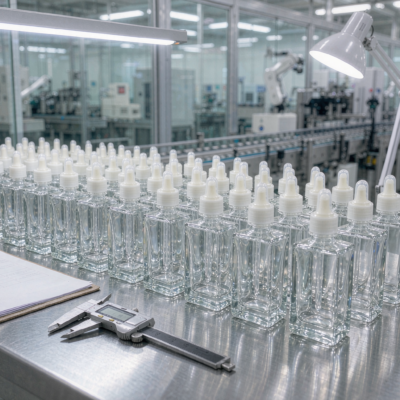
Scale and specialization. Chinese perfume glass factories have invested heavily in automation over the past decade. Our IS machine lines run 24/7 with robotic handling and inline inspection. Defect rates have dropped from 8% to under 2% since 2020. Smaller factories in India or Vietnam cannot yet match this consistency at comparable volumes.
Design capability. Chinese factories have moved up the value chain. We now employ industrial designers, 3D modelers, and color chemists in-house. A brand can send a sketch and receive a production-ready prototype in 35 days without hiring an external design agency. That capability is rare outside China.
The risks are real—tariffs, shipping volatility, and IP concerns—but they are manageable with the right partner. We recommend audits (we welcome third-party inspections), clear contracts with mold ownership clauses, and phased orders that build trust before scaling to full container loads.
Opportunities for Niche and Indie Brands
The Asia-Pacific fragrance boom is not just benefiting luxury houses like Dior and Chanel. Indie and niche brands are capturing disproportionate growth. In China, local indie fragrance sales grew 34% in 2025, compared to 6% for mass-market imports. These brands need packaging that signals craft and authenticity without LVMH budgets.
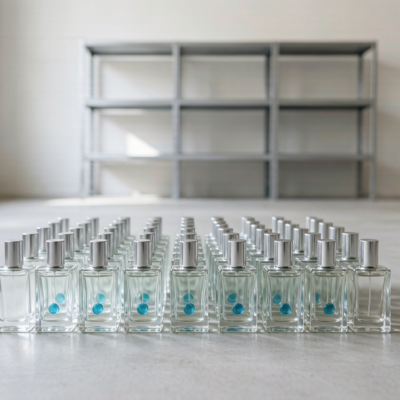
This creates demand for mid-MOQ perfume glass bottle programs—1,000 to 5,000 units—with custom decoration but stock shapes. Our factory has developed a “semi-custom” platform: 40 stock bottle shapes, each available with 8 decoration techniques, 12 color options, and 6 cap styles. A brand can create a unique look without paying mold fees. Lead time is 18–25 days. MOQ is 1,000 units per SKU.
For brands ready to invest in custom molds, the Asia-Pacific market rewards differentiation. A unique bottle shape that photographs well on Xiaohongshu or Instagram can drive organic marketing worth far more than the mold cost. We have seen indie brands achieve 3× return on mold investment through social media shares and unboxing videos.
Frequently Asked Questions
What is the fastest-growing perfume bottle market in Asia-Pacific?
India and Southeast Asia are growing fastest, with fragrance sales up 14.2% and 11.3% respectively in 2025. China remains the largest absolute market but is maturing, with growth slowing to 5–6% annually.
Do I need different bottle designs for China, Japan, and India?
Often yes. Size preferences, aesthetic tastes, and decoration norms vary significantly. We recommend market-specific SKUs rather than one-size-fits-all packaging. Our design team can adapt a single concept for multiple markets efficiently.
Is PCR glass available for Asia-Pacific orders?
Yes. We offer 30%, 50%, and 70% PCR content options, certified to FEVE European Container Glass Federation and Glass Packaging Institute standards. PCR glass is increasingly requested by brands targeting sustainability-conscious consumers in China and South Korea.
What certifications should I request for glass bottles exported to Japan?
Japan requires heavy-metal migration testing under the Food Sanitation Law. We provide third-party lab reports for lead, cadmium, and arsenic content with every shipment. BIS certification is required for India.
How long does it take to ship perfume bottles from China to Southeast Asia?
Sea freight to most Southeast Asian ports takes 7–14 days. Air freight is 3–5 days but costs 8–10× more. For launch quantities under 5,000 units, air freight is often viable. For scaling orders, sea freight is essential.
Conclusion: Act While the Window Is Open
The Asia-Pacific perfume glass bottle market is in a rare phase: demand is growing, consumer preferences are diversifying, and the supply base is capable but not yet commoditized. Brands that enter now with well-designed, market-appropriate packaging can build loyalty before the market consolidates around a few dominant players.
Our factory ships over 3 million perfume glass bottle units annually, with dedicated programs for Asia-Pacific markets. We provide compliance certification, semi-custom platforms for indie brands, and full custom mold services for established houses. If you are planning an Asia-Pacific launch, send us your brief. We will help you design a bottle that fits the market, passes every regulatory test, and arrives on time. The opportunity is real. Let us capture it together.