Fragrance packaging is entering 2027 with an unusual amount of change in motion. The industry that spent two decades perfecting heavy, ornate, permanent glass is now being pulled in four directions at once: regulators demanding less material and more recyclability, consumers demanding more refill options and more tactility, social media demanding more visual drama per square centimeter, and cost pressure demanding all of the above without price increases. The result will not be one trend but a set of tensions — and the brands and buyers who navigate them well will treat their bottle decisions as strategy, not styling.
This article maps the packaging trends most likely to shape 2027 perfume bottles and secondary packaging, with the emphasis on what a buyer or brand owner can actually act on: which changes are structural rather than fashionable, where the costs and lead times move, and which trends are safe to sit out. The perspective is sourcing-side, because that is where trends become real — a trend that cannot be manufactured at your volume and price point is content, not strategy.
Refill Moves From Novelty to Default
The single most consequential trend is the continued normalization of refillable formats. What began as a sustainability gesture at the luxury end has become a mainstream expectation, driven by EU regulatory pressure on single-use packaging and by the obvious margin logic: a refill pouch or bottle carries fragrance without carrying a new flacon every time.
For 2027, expect three things. First, more brands launching a refillable “core” bottle alongside the standard one, rather than choosing between them. Second, cored designs — bottles engineered with an inner glass reservoir and a rotating or pump-transfer outer shell — moving down-market from ultra-luxury into the premium mainstream, with component suppliers finally offering standardized refill mechanisms rather than bespoke ones. Third, refills themselves becoming branded objects: designed pouches and styled refill bottles that deserve shelf space, not white-box afterthoughts.
The sourcing implication is significant: refill systems add components, tolerances, and validation work. A transfer mechanism that must survive dozens of cycles is a different engineering problem from a cap that is screwed on once. Brands moving into refill should expect longer development timelines and should study the system-level design questions in our guide to refillable bottle systems, as well as the market forces behind the shift described in why refillable bottles are reshaping the industry.
The Weight Paradox: Heavier Feel, Lighter Footprint
Here is the tension that will define glass sourcing conversations in 2027: consumers consistently associate heavier bottles with quality, while regulation and cost pressure push toward lighter glass. Both things are true, and the market is responding to both.
The resolution emerging in premium packaging is selective mass — bottles that feel heavy where the hand meets them (a thick base, a dense zamac cap) while the overall glass weight drops. A thick, polished base on a lightweighted body delivers most of the perceived quality of a heavy bottle at a fraction of the material. This is engineering, not styling: base thickness, wall distribution, and center of gravity are being tuned deliberately, and the underlying trade-offs are covered in our articles on base thickness and glass thickness decisions.
Expect 2027 buyers to see more brands asking for exactly this: a weight target for the hand, a carbon target for the report, and a mold that satisfies both. Suppliers who can demonstrate lightweighting without visual compromise — and validate it in transit testing — will win the projects.
Color: Tinted Glass, Gradients, and Purpose
Color is the most visible trend surface, and 2027 continues a clear direction: away from clear glass as the default, toward colored and treated glass as identity. Three currents matter.
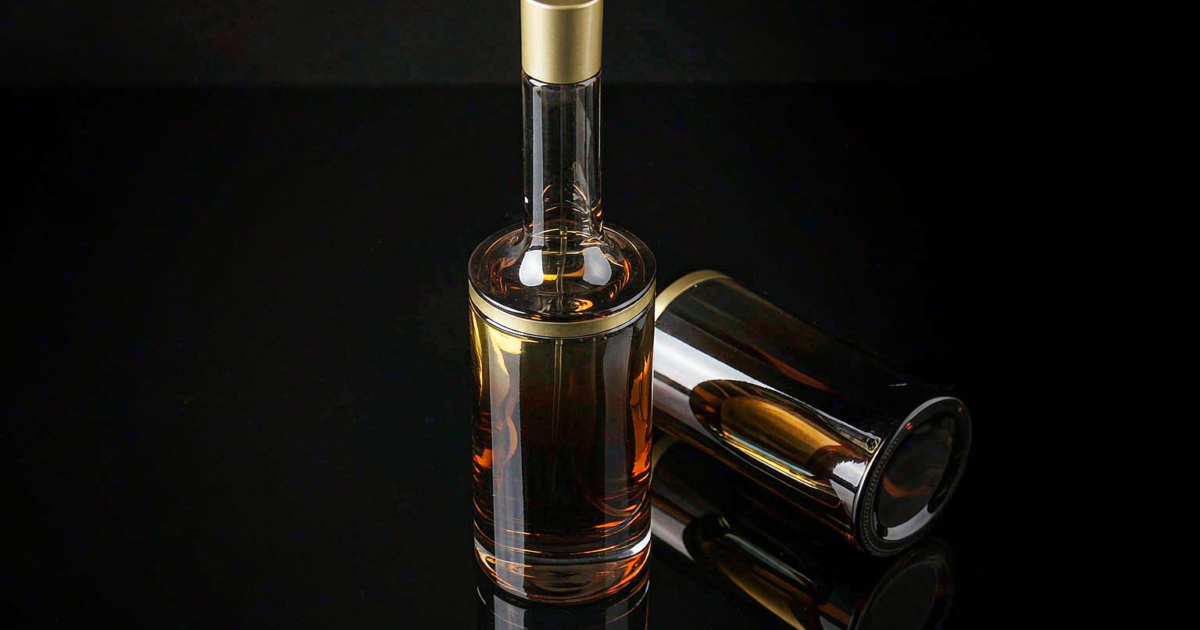
First, tinted and coated glass as brand signature. Amber, olive, smoke, and deep violet tones — once niche — are now mainstream choices, helped by their functional story: darker glass genuinely protects fragrance from UV degradation, a benefit documented in our amber glass and UV protection guide and the chemistry behind colored glass in colored glass and fragrance stability. Expect more brands to lead with the protection story as a selling point rather than an apology for not being clear.
Second, gradients and surface treatments as mid-market differentiators. Spray-gradient effects that were luxury-only two years ago have appeared in the premium-mass tier as spray technology and masking discipline spread — the techniques and cost drivers are laid out in our gradient color bottles guide. As with every decoration trend, the risk is sameness: when everyone sprays a sunset, the sunset stops differentiating. Watch for brands moving to subtler effects — soft vertical fades, interior color, two-tone bases.
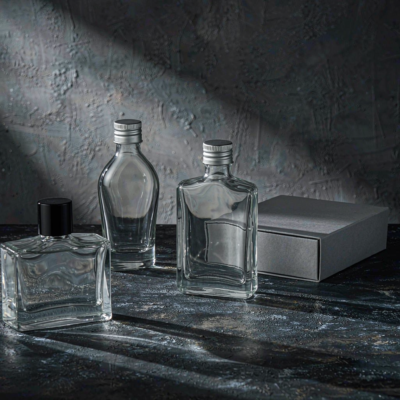
Third, a minimalist counter-current. A meaningful segment of the market is going the other way: clear glass, no color, typography-led design, refills doing the sustainability work. This is not retreat but segmentation — the minimalist play works when the brand’s story is precision and material honesty, as analyzed in our minimalist design trends piece. Both directions will grow in 2027; the loser is the undifferentiated middle.
Gender-Neutral Design Language Matures
The shift away from explicitly gendered bottles — soft curves and pastels for “her,” black slabs and gunmetal for “him” — has been discussed for years, but 2027 is when it stops being a niche statement and becomes a design default for new launches. The driver is demographic: younger fragrance consumers shop by scent profile and mood, not by the marketing department’s gender map.
What changes on the shelf is subtle but real. Expect more bottles built on architectural and material cues — weight, texture, finish — rather than silhouette stereotypes. Brushed and soft-touch surfaces, tactile ridges, and cap materials like ceramic-feel coatings and real metal carry the “premium” signal that used to be delivered by shape language. The design rules that consistently work in this space are summarized in our gender-neutral packaging guide.
For sourcing, this trend is quietly convenient: a gender-neutral bottle is usually a simpler bottle — fewer secondary parts, more focus on finish quality — which tends to mean better yields and fewer decoration layers to fail. Some of the most cost-effective premium bottles of the next two years will be minimalist ones.
Miniatures and Travel Formats Keep Growing
The miniature boom is not a passing TikTok phenomenon; it has structural drivers. Discovery sets have become the industry’s most efficient customer-acquisition tool. Travel retail continues its recovery. And the cultural visibility of shelf displays — collections photographed and shared constantly — makes small formats disproportionately valuable as marketing objects. The mechanics of how social platforms shape bottle design are covered in our social media design trends analysis.
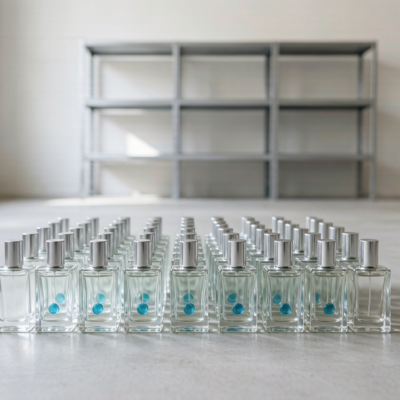
For 2027, expect miniatures to become more designed: not merely scaled-down flagships but objects in their own right, with decoration quality approaching full size and refillability appearing at small scale. Brands should also expect discovery sets to harden into a standard launch component — new fragrance launches increasingly ship with a coordinated mini program from day one. The sourcing guidance for this segment, from pump matching to breakage control, is consolidated in our mini and travel bottles wholesale guide.
Decoration Technology: Precision Over Ornament
Decoration trends in 2027 favor precision and durability over maximal ornament. Three techniques are ascending.
Laser engraving continues to replace some printing applications where permanence and a clean, markless-feel aesthetic are wanted — no ink to scratch or fade, and an increasingly practical cost profile, per our laser vs screen printing comparison. UV-cured inks are becoming the default answer to the durability question, with buyers now routinely asking for rub and alcohol resistance data before approving a print spec — the questions to ask are listed in our UV-cured inks guide. Textured and soft-touch coatings spread further down-market, giving tactile identity to minimalist bottles; their production sensitivity to booth conditions is real and documented in our spray booth control article.
Meanwhile, the ornament arms race — full metallization, multi-foil builds, water-transfer wraps — cools at the middle of the market. Not because the techniques disappeared, but because their cost per unit has become harder to justify as glass and component costs rise, and because the minimalist direction rewards restraint. Vacuum metallization remains strong specifically at the luxury tier, where its cost is a feature; the parameters that make it succeed are in our vacuum metallization guide.
Regulation Becomes a Design Input
The quietest trend is also the most certain: regulation is now a first-class design constraint, not a compliance afterthought. The EU’s packaging and packaging waste rules are driving three concrete changes buyers will see in 2027 quotes and specs.
First, recycled content targets push PCR glass from pilot projects into standard offerings — with the color consistency and supply caveats explained in our PCR glass buyer’s guide. Second, recyclability design rules penalize structures that are technically recyclable but practically not: heavy mixed-material caps, non-separable plastic liners, coatings that interfere with glass recycling streams. Expect simpler cap constructions and more mono-material thinking. Third, labeling and information requirements push brands toward designs where compliance information has a designed home — often the secondary carton — rather than being squeezed onto the bottle at legal minimum sizes.
Buyers should treat regulatory-driven design changes as an opportunity to simplify: many compliance-driven simplifications also reduce unit cost and improve line yields. The overarching compliance landscape for cosmetic packaging is mapped in our FDA cosmetic packaging regulations-eu-cosmetic-packaging-perfume-glass/”>FDA and EU packaging rules guide.
What Not to Chase in 2027
A trends article should also say what to skip. Three candidates:
Trend-chasing redesigns of a working bottle. If your flacon has brand recognition, a cosmetic refresh is marketing; a redesign is risk. The shelf test — does the new bottle read as yours at a glance — fails more often than buyers expect.
Every viral material. Exotic finishes and novel substrates arrive with social momentum and leave with supply problems. By all means experiment at the sampling stage, but anchor production on materials with a multi-year supply story.
Sustainability claims without substance. The refillable bottle whose refill never launches, the “recyclable” bottle with an unrecyclable cap, the PCR claim without documentation — consumers and regulators are both getting better at calling these out. A credible, modest program beats an ambitious, hollow one.
The through-line for 2027 is coherence: the winners will be bottles whose material story, decoration, weight, and refill logic all point the same direction — and whose supply chains can deliver that coherence at volume. That is a sourcing discipline as much as a design one.
FAQ
Which 2027 packaging trend should a small brand prioritize first?
Refill-readiness in your bottle architecture. You do not need to launch a refill program immediately, but choosing (or customizing) a bottle whose geometry can later accept a refill mechanism or a transfer system keeps the door open at near-zero extra cost today. The second priority is a decoration approach that survives alcohol handling — durability data costs little to demand and protects the brand for the life of the SKU.
Are refillable perfume bottles actually more expensive to source?
Yes, at first. A refillable system adds components — an inner reservoir, a transfer mechanism or pouch system, and additional validation for repeated use — typically raising packaging cost per unit by a meaningful double-digit percentage. The economics work at the brand level through repeat refill sales at higher margins and through regulatory positioning, not through cheaper first units. Expect total system cost to fall as component suppliers standardize mechanisms through 2027.
Is colored glass a real trend or just fashion?
Both, but with a functional core. Consumer preference for tinted glass (amber, olive, smoke) is partly aesthetic fashion, but the UV-protection benefit for fragrance stability is genuine chemistry, and brands are increasingly using it as a marketing story. Amber and dark glass in particular pair a shelf-identity trend with a defensible product claim — the rare combination in packaging trends. Light tints chosen purely for looks should be validated for the fragrance’s photosensitivity.
Will lightweighting make premium bottles feel cheap?
Not if it is done selectively. The emerging standard is a lightweighted body with a deliberately weighted base and/or cap, preserving in-hand heft while cutting total material. Perceived quality tracks the hand’s impression and the sound of the cap more than the total mass. The bottles to avoid are those lightened uniformly — thin walls and a feather-light base are what actually read as cheap.
How far in advance should I plan for a 2027 launch incorporating these trends?
Custom bottles require 60–90 days of production lead time after sampling, and sampling itself — with the mold and design iterations these trends often involve — adds 4–8 weeks. Refill systems and PCR glass add supplier qualification time. A realistic planning window for a trend-informed custom launch is 6–9 months from brief to goods-at-filling-plant, plus shipping. Trend adoption in packaging is a supply chain project before it is a design project.